
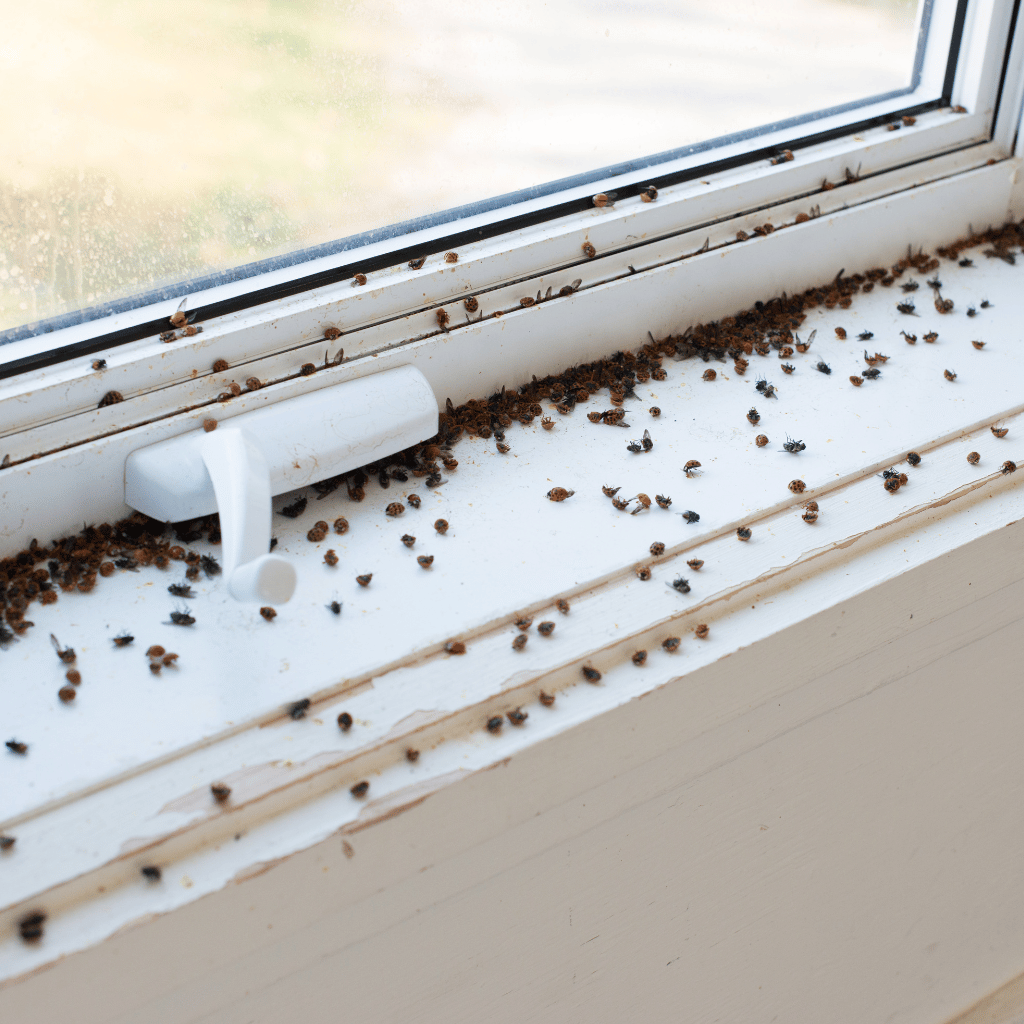
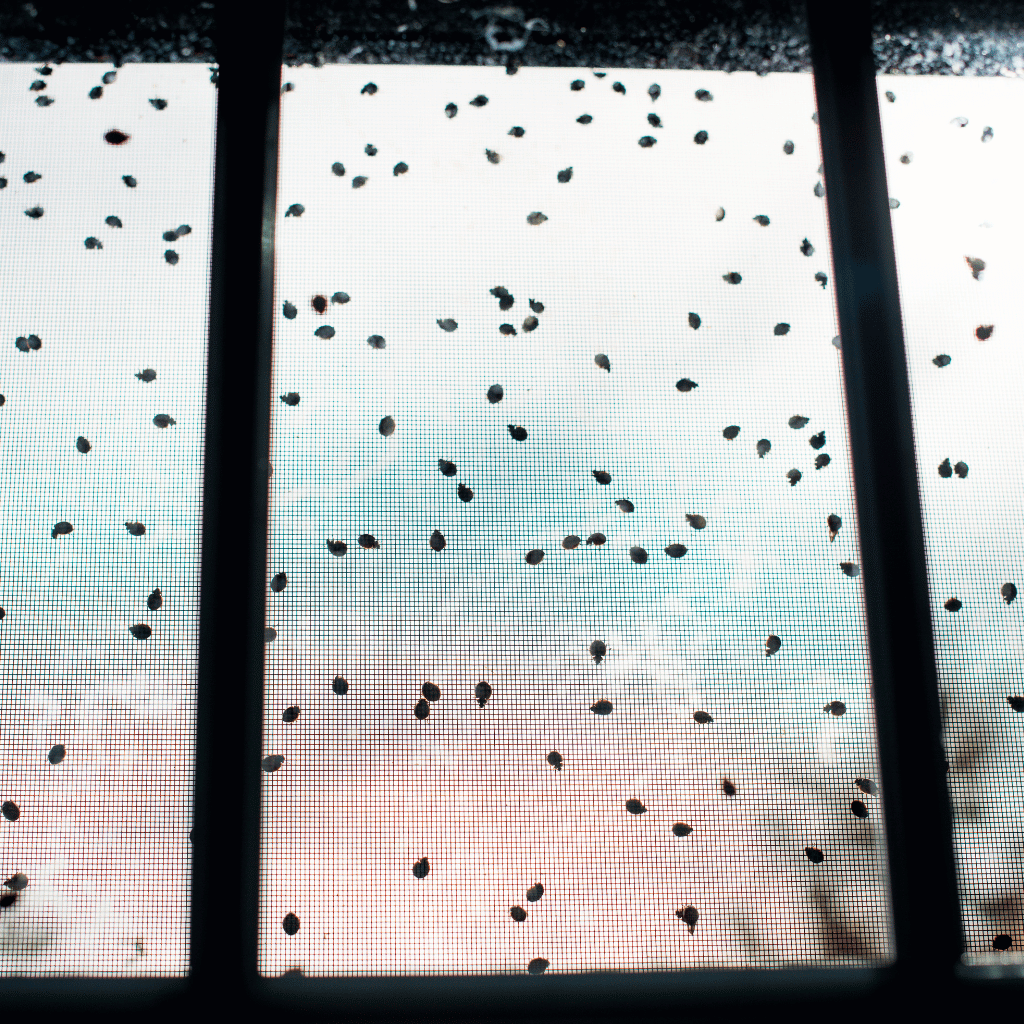
Late September, a warm afternoon after the first cold snap: the south wall of the house turns orange with small beetles. By the next day they are in the windows, on the ceiling, inside the light fixtures. These are not the red, seven-spotted ladybugs you grew up with, but the Asian lady beetle (Harmonia axyridis), established in Quebec since the 1990s. Here is how it gets in, what it does once inside, and what actually works.
Telling it apart in 10 seconds
The Asian lady beetle is 5 to 8 mm long. Its colour ranges from pale yellow to deep orange, with anywhere from 0 to 19 black spots. The giveaway is just behind the head: a black M-shaped mark (a W from the other side) on a white background.
| Asian lady beetle | Native lady beetles | |
|---|---|---|
| Colour | Yellow to deep orange, variable | Red to orange, more uniform |
| Behind the head | Black M on white | No M |
| Where it spends the winter | In walls, attics, window frames | Outdoors, under leaf litter |
| In groups | By the dozens or hundreds | Rarely inside homes |
Why your house and not your neighbour’s
In its native range, this beetle overwinters on sunny cliffs and rock faces. Here, a tall, pale, sunny wall does the same job. Three things decide whether it picks your home:
- Exposure and colour. South and southwest walls, especially light or contrasting ones, draw the first groups. Health Canada suggests paying special attention to those sides.
- Timing. Mass flights happen on warm, sunny afternoons following a cold spell, usually from late September to late October.
- Openings. Once on the wall, they look for any gap: window and door frames, soffits, vinyl or wood siding, dryer vents, cable and pipe entries, attic vents.
The first arrivals mark the spot, which is why the same houses, and often the same corners, get hit year after year.
What they do once inside
Most never reach your living space. They cluster inside walls, attics and window frames and stay dormant all winter. The ones you see have taken a wrong turn: they head toward warmth and light on mild winter days, then in large numbers in spring, when they try to get back out.
They don’t breed indoors, don’t eat wood or food, and don’t spread disease. The real problems are elsewhere:
- Stains and smell. When disturbed or crushed, they release a strong-smelling yellow fluid that stains light walls, curtains and fabric.
- Allergies. Some people react to Asian lady beetles with a runny nose, itchy eyes, sometimes asthma. If symptoms come back every fall, mention it to your doctor.
- What comes next. Hundreds of dead beetles in a wall or attic feed carpet and larder beetles, whose larvae then move on to wool, rugs and dry food.
Removing them without staining the walls
- Vacuum, don’t sweep. A broom crushes them against the wall. Slip a nylon stocking into the vacuum hose and hold it with an elastic: the beetles stay in the stocking, which you empty into a sealed bag outside. With a bag vacuum, throw the bag out after use or they will crawl back out.
- Don’t crush them. Even with a tissue, you will get a stain.
- Windows first. That is where they gather when looking for a way out. One pass a day during the active period is often enough.
- Light traps in the attic or a dark room catch the ones moving around, with no product at all.
Insecticides: what you should know
Health Canada is clear: no pesticide is registered in Canada to control lady beetles. Spraying indoors does nothing (they are inside the walls) and leaves residue in your home. Treating the outside walls doesn’t solve it either: the only method that works is keeping them out. Be wary of anyone offering to “treat” lady beetles.
Keeping them out: timing is everything
Sealing works on one condition: it has to be done before they arrive, in August or early September. Done from the inside in mid-winter, it can trap the beetles already in the walls and push them into the rooms instead.
- Caulk around windows and doors, on the outside.
- Seal cracks in siding and foundations, and the joint between siding and soffits.
- Put fine mesh over attic and dryer vents, and check window screens.
- Seal cable, pipe and wall air conditioner openings.
- Start with the south and southwest walls, where they land.
If you have had an invasion before, a summer inspection finds the entry points before the season starts. A professional looks for the same gaps that stink bugs and cluster flies will use in the fall: one round of sealing often solves all three.
When to call
- You keep finding beetles in several rooms despite vacuuming.
- They show up every year in the same spot and you want to know where they get in.
- You find small hairy larvae in closets or rugs in spring: probably carpet beetles feeding on the dead lady beetles.
Our home protection plan includes an audit of the house and a yearly follow-up, the right time to go over every opening. For an assessment, contact us or call 514-638-8705: the estimate is free.
Not sure what you found? Our guide to bugs in the house in Quebec helps you identify it by where and when you see it.
Frequently asked questions
Do Asian lady beetles bite?
No. Health Canada states they neither sting nor bite. The yellow fluid they release is not dangerous, but it stains and can irritate sensitive people.
Will they lay eggs in my house?
No. They breed outdoors in spring and summer, on plants where aphids live. The ones in your house are just waiting to get back out.
Why am I seeing them in January?
A mild day or the heating wakes up the ones near a warm surface. They head toward the light and end up in the windows. That is normal; vacuuming is enough.
Can I leave them in the attic?
A few, yes. Hundreds every year, better to clear them out in spring: their bodies attract carpet beetles.