
Introduction
In Quebec, carpenter ants are a real issue for many homes, especially those built from wood. Contrary to popular belief, they don’t eat wood like termites do. They excavate it, carving galleries to build their nests—causing serious long-term damage.
But why do they specifically settle in Quebec homes? What are the warning signs, and how can infestations be prevented? This article explores the issue thoroughly and honestly.
What Is a Carpenter Ant?
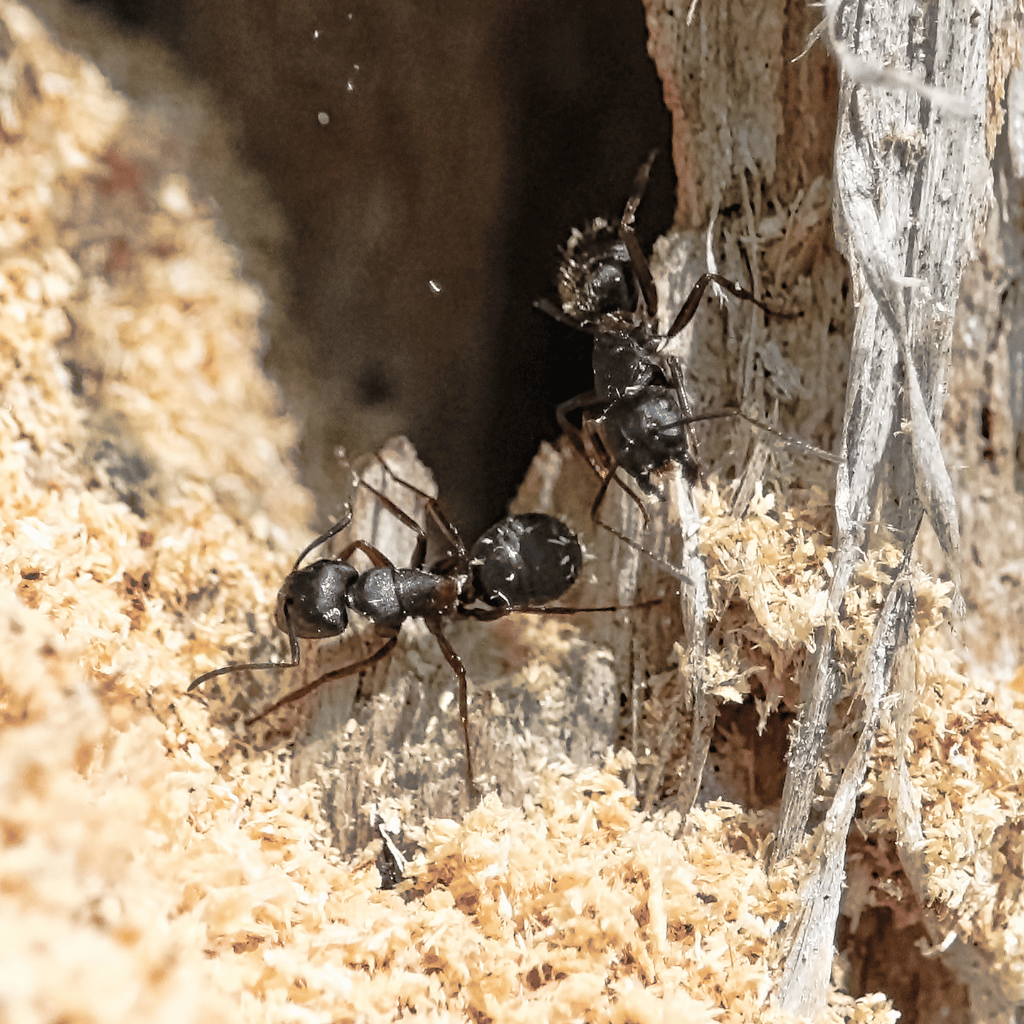
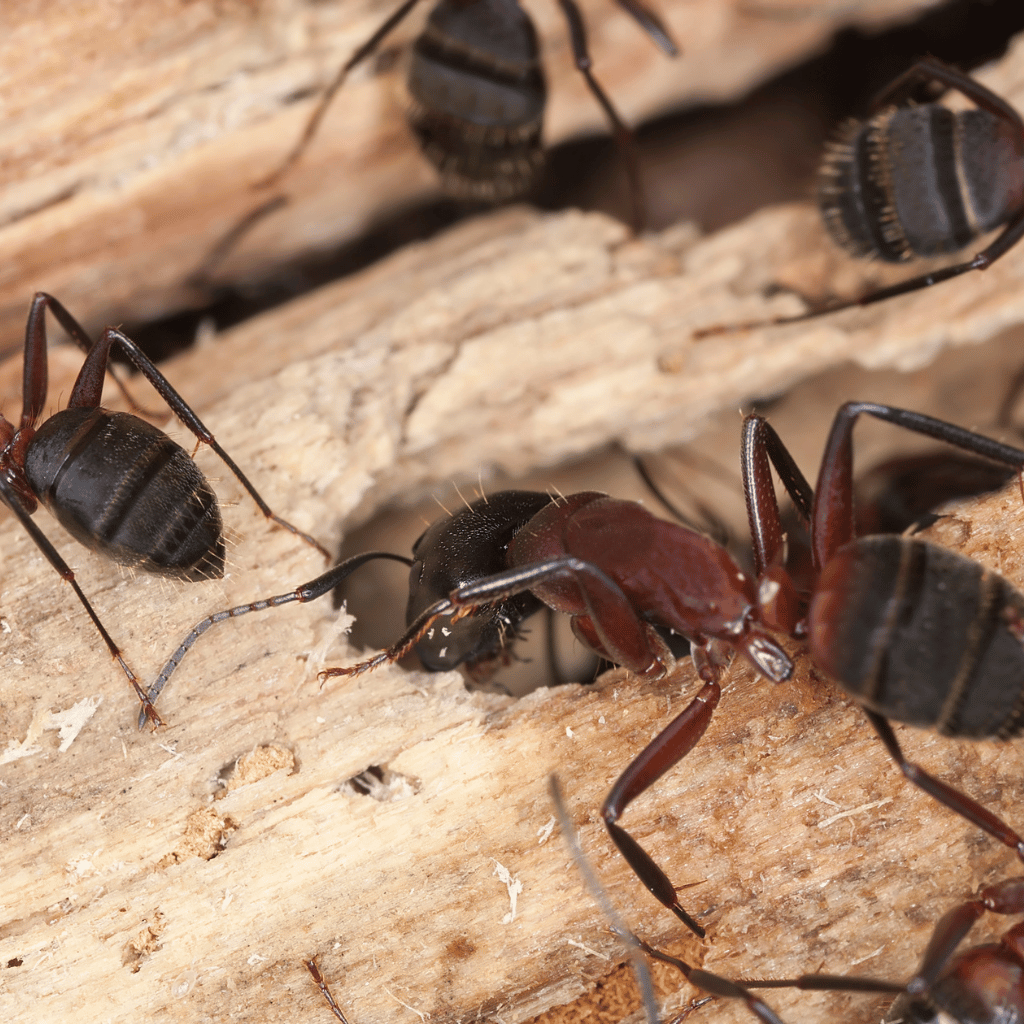
The black carpenter ant, scientifically known as Camponotus pennsylvanicus, is the most common species in Quebec. Large in size (6 to 13 mm), it’s typically black or dark brown. It lives in colonies with a queen and can number in the thousands.
Unlike small kitchen ants, it’s mostly active at night and prefers humid, hidden areas. A main colony may settle outdoors (tree stump, shed), while satellite nests can appear inside buildings.
Why Wooden Houses Are Targeted
Wood, especially when moist, softened, or damaged, is an ideal refuge for carpenter ants. Here’s why:
- Natural thermal insulation: Wood retains heat—perfect for sheltering the queen and larvae.
- Easy to excavate: Soft or deteriorated wood is easy to carve into galleries.
- Frequent moisture: Water infiltration, condensation, or unrepaired water damage offer easy entry points for colonies.
- Presence of dead wood: Old beams, aging frames, timber walls or damaged floors are prime targets.
In Quebec, most single-family homes and cottages are built with wood. That’s why this type of construction is frequently affected.
Factors That Promote Infestation
1. Unrepaired water leaks or infiltration
A leak under a sink, poorly directed gutter, or leaky roof can soak part of the structure. That’s a perfect environment for an ant colony.
2. Aging framing or wood in contact with soil
Wood laid directly on a concrete slab or soil absorbs ground moisture. Over time, it becomes brittle and attracts ants.
3. Vegetation touching the house
Tree branches, vines, or hedges touching the house act as natural bridges to the roof or walls.
4. Winter shelter inside heated homes
In the fall, ants seek warmth to survive the winter. A wooden house provides thermal comfort and stability. If undisturbed, they may stay permanently.
How to Know If Your House Is Infested
Carpenter ant infestations aren’t always easy to detect—they can live silently for years. Look out for these key signs:
- Large black ants indoors, especially at night.
- Faint tapping or rustling sounds in walls or ceilings (especially at night).
- Small piles of sawdust near baseboards, windows, or door frames.
- Winged ants (reproductives) emerging in spring or summer, often near windows.
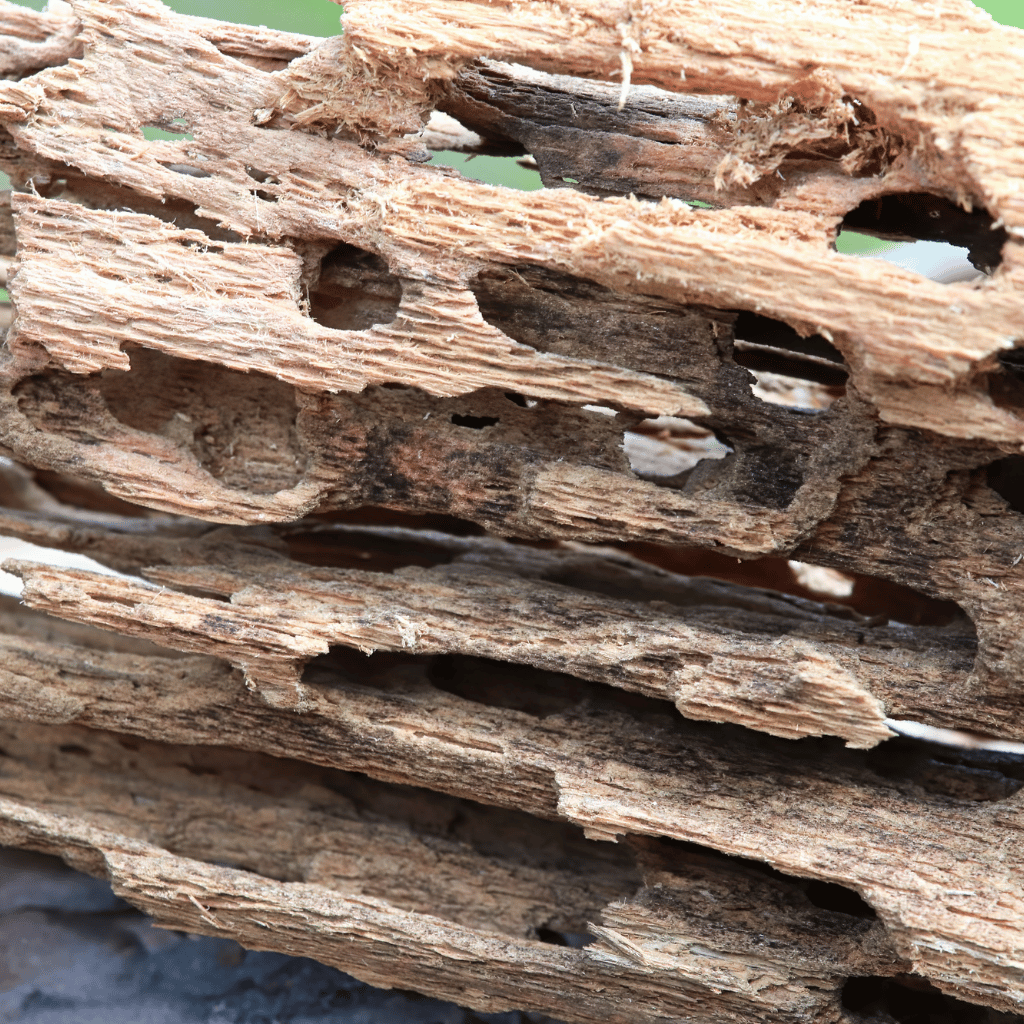
- Visible galleries in wood (if a piece is opened).
Risks to the Building’s Structure
Over time, ants can carve hundreds of galleries through beams, joists, or wooden walls. Though they don’t eat wood, their excavation weakens structures.
Damage is often hidden until a section collapses or renovations reveal the extent. The older the infestation, the more expensive the repairs. In some cases, structural rehabilitation may cost several thousand dollars.
Prevention and Treatment Solutions
1. Regular perimeter inspection
Check foundations, bottom walls, door thresholds, window frames, and attics. Look for sawdust, droppings, or moisture.
2. Prompt repair of leaks and moisture sources
Act fast to keep wood from softening. Use a dehumidifier in basements or crawl spaces if needed.
3. Trim vegetation in contact with the house
Keep 30 to 50 cm of clearance between walls and vegetation. Ants shouldn’t be able to reach the house via branches.
4. Seal cracks and entry points
Seal cracks in the foundation, holes around pipes, and gaps around doors and windows using quality exterior caulking.
5. Professional treatment
An experienced exterminator will use:
- Gel-based baits (eaten and brought back to the nest);
- Residual treatments around entry points, baseboards, and potential nesting sites;
- Thermal or sound inspection to locate galleries in the walls if needed;
- A follow-up strategy to ensure the full colony is eradicated (including satellite nests).
At Integral XT, we use products adapted to Quebec’s climate—safe for children and pets—and guide you through repairs and long-term prevention.
Conclusion
Carpenter ants pose a serious threat to wooden homes in Quebec—especially in humid or wooded environments. Understanding their habits and the conditions that attract them helps prevent major damage.
If you’ve noticed suspicious signs, don’t wait. A single ant could be the tip of a well-hidden iceberg inside your walls. Contact a specialist now for a full assessment.