
Introduction
Fruit flies, also known as drosophila, are tiny insects but particularly persistent once they settle in a kitchen. Their presence is often trivialized, but they can quickly become overwhelming. They reproduce at a stunning rate, especially during warm months in Quebec, between May and September. However, it’s not uncommon to see them even in winter in well-heated homes where food sources are available.
Contrary to popular belief, their presence is not necessarily linked to poor hygiene, but rather to favorable breeding conditions: ripe fruits, juice residues, or poorly maintained drains. Fighting fruit flies requires a combination of source elimination, targeted intervention, and long-term prevention.
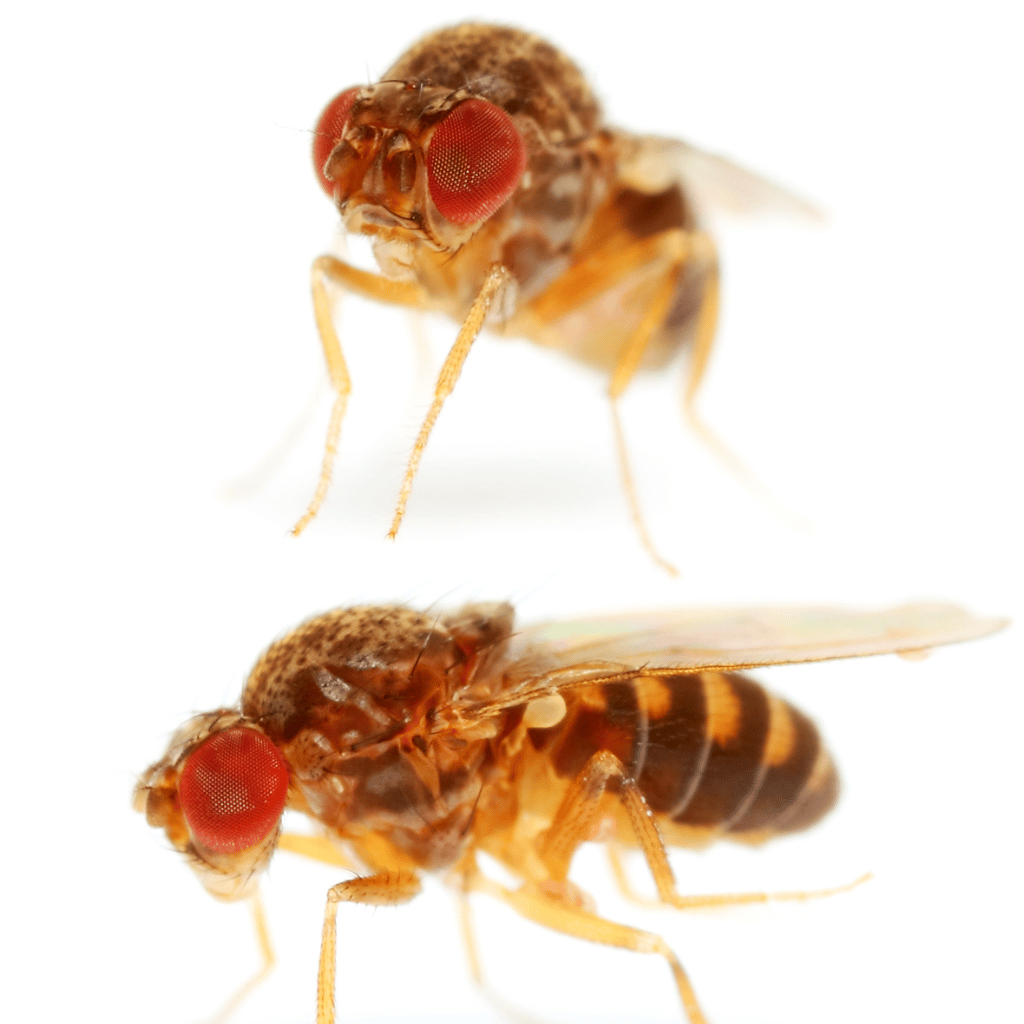
How to Recognize Fruit Flies
It’s important not to confuse them with other types of domestic flies (houseflies, fungus gnats, or drain flies). Here’s how to identify them:
- Small size: around 2 to 4 mm.
- Very visible red eyes (main feature, though not always present).
- Light brown to yellowish body, sometimes slightly translucent.
- Slow, erratic flying pattern around fruits, bottles, drains, or compost bins.
The eggs and larvae are microscopic. A single female can lay up to 500 eggs, which hatch in less than 24 hours. The full cycle (egg to adult fly) takes only 7 to 10 days, explaining why the infestation can suddenly “explode.”
Causes of an Infestation in a Kitchen
Here are the main infestation hotspots:
- Very ripe fruits and vegetables, especially bananas, apples, tomatoes, grapes.
- Unrinsed empty bottles: wine, juice, beer, vinegar.
- Countertop compost bins that are full or not sealed.
- Kitchen sinks and drains: organic deposits in pipes.
- Open trash bins or ones containing sticky residues.
- Spilled food under appliances or around baseboards.
Fruit flies are attracted to fermentation. A single forgotten glass with some juice can be enough to start a colony. Once established, they seek to lay eggs in moist, sugary environments invisible to the naked eye.
Steps to Eliminate Fruit Flies
1. Identify and remove food sources
- Inspect fruits: throw out overripe or damaged ones.
- Clean bottles, jars, jam or honey containers, soy sauce bottles.
- Empty compost daily or store it in the freezer.
2. Clean surfaces and appliances
- Wipe down counters, walls near the stove, pantry shelves with soapy water and vinegar.
- Clean inside the microwave, dishwasher, and fridge (including rubber seals).
3. Clean the drains
Pour a mix of baking soda and white vinegar down the drain to disinfect. Let it sit for 30 minutes, then pour boiling water. Repeat daily for a few days to kill larvae in the pipes.
4. Set traps
Use homemade traps (see next section) to catch flying adults. This is the most effective way to quickly break the reproduction cycle.
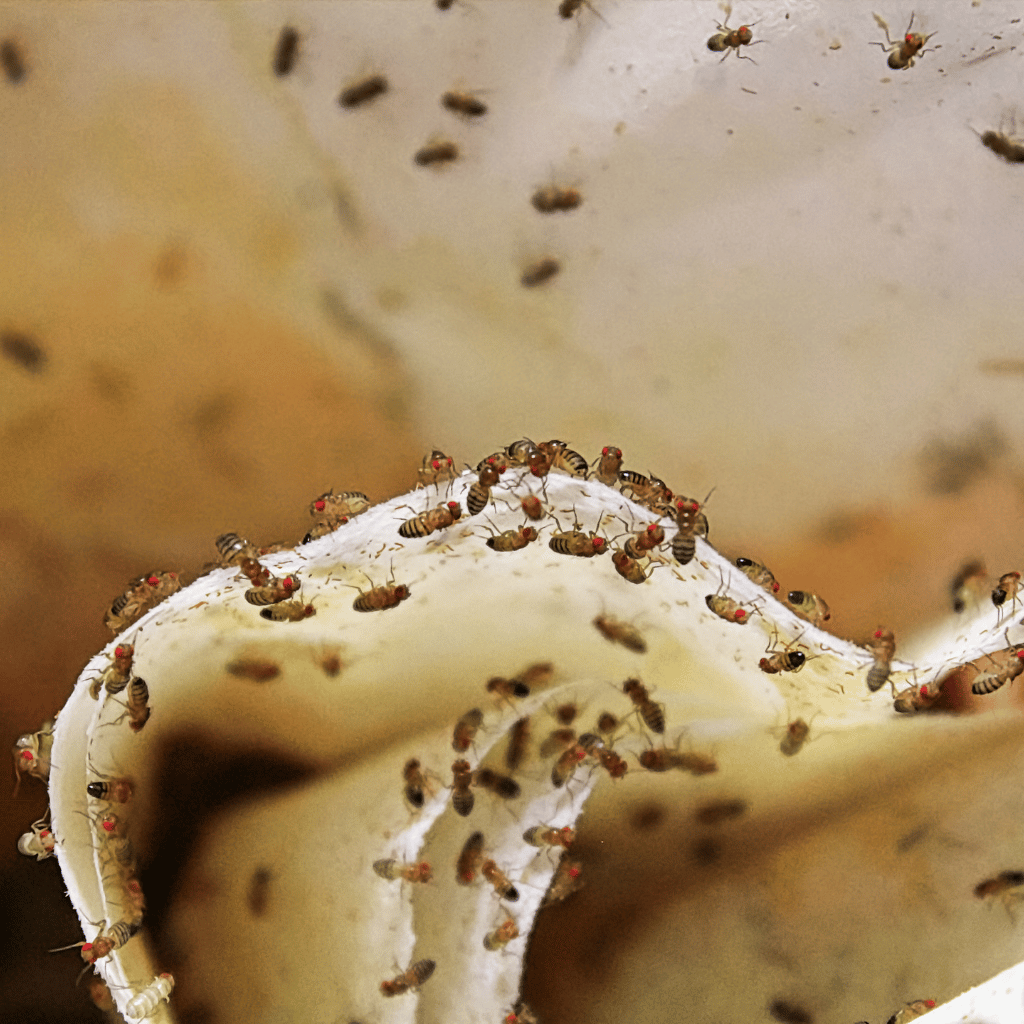
Traps and Natural Methods
1. Apple cider vinegar trap
- Fill a small bowl with apple cider vinegar and add a few drops of dish soap.
- Cover with plastic wrap and poke small holes (or leave uncovered).
Flies are drawn to the smell, go through the holes, and can’t escape. The soap breaks the surface tension, causing them to sink.
2. Fruit + plastic wrap trap
Place a small piece of banana in a Mason jar. Cover with plastic wrap and poke holes. You can catch dozens overnight.
3. Trap using red wine or beer
Fermentation residues also attract drosophila. Use the same principle as vinegar: a bit of liquid + dish soap + plastic wrap with holes.
4. Use of repellent plants
Plants like basil, lavender, or bay leaf may help repel fruit flies, but are not enough to eliminate an infestation.
Preventive Measures to Avoid a Return
- Store fruits in the fridge during warm periods.
- Seal containers tightly (honey, sugar, compote, wine).
- Clean drains regularly, especially in summer.
- Clean behind and under appliances at least once a month.
- Empty and wash trash and compost bins frequently, especially if they’re not airtight.
- Avoid squashing flies on the wall: it can leave marks that attract other insects.
Often, people solve 80% of the problem but miss one crucial thing like a syrup cap or a forgotten can. Thoroughness is key.
When to Consult an Expert
If fruit flies keep coming back or spread abnormally, it could indicate:
- A colony in an inaccessible area (poorly sealed drain, hollow wall, faulty appliance).
- Poor ventilation or leaks creating a favorable microclimate.
- Presence of another insect species (fungus gnats, drain flies, etc.).
An exterminator can:
- Conduct a full inspection (including appliances, pantry, plumbing).
- Identify the exact infestation source.
- Use professional treatments if needed, often growth regulators or targeted natural products.
At Integral XT, we prefer a gentle approach for fruit fly infestations, focusing on detection and sustainable prevention. We do not recommend commercial aerosols — they’re ineffective against eggs and larvae and may contaminate food surfaces.
Conclusion
Fruit flies may be small, but their ability to reproduce rapidly makes them highly invasive. One small oversight can spark an infestation.
Fortunately, with a thorough approach — identifying the source, cleaning, homemade traps, and preventive maintenance — they can be effectively eliminated. In more complex or recurring cases, a professional can solve the root of the problem.
And most importantly, remember: it’s not about hygiene, it’s about vigilance.