

Bed Bug Exterminator
Bites in the morning, spots on the mattress: we confirm it, help you prepare, and treat until the last generation is gone.
How to tell if it’s bed bugs
- Bites in the morning, often clustered or in a line, on the arms, neck, back or legs
- Black dots on mattress seams, the box spring, the headboard: these are their droppings
- Small blood stains on the sheets
- Shed skins, brown and translucent, left as they grow
- The bugs themselves, hiding in mattress folds, bed frame cracks, behind baseboards and outlets
Bites alone aren’t proof: many people don’t react, and other insects bite too. See how to identify a bed bug bite and how it differs from a mosquito bite.
Know the bed bug
The bed bug lives only on blood, doesn’t fly and doesn’t jump. It travels with us: in luggage, used furniture, clothing. It has nothing to do with how clean a home is.
Description
Life cycle
Where they hide
How they arrive
Risks
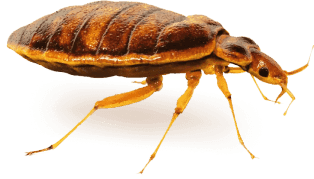
Adults are 4 to 7 mm long, the size of an apple seed. They are flat, oval and reddish-brown, rounder and redder after feeding. Young bed bugs are smaller and pale, almost translucent. The white eggs are about 1 mm and glued into cracks.
A female lays a few eggs a day, several hundred over her life. Eggs hatch in about ten days, and it takes around five weeks at room temperature to reach adulthood, with a blood meal at each stage. Adults can survive several months without feeding: an empty home doesn’t solve the problem.
They stay close to where people sleep or sit for long periods: mattress seams and tags, box spring, bed frame and headboard, couch, night table. As the infestation grows, they spread to baseboards, picture frames, outlets, then to neighbouring rooms and units.
Through travel, a second-hand piece of furniture or mattress, a visit, a move. In Quebec, July 1st is the peak: infested mattresses and couches are left on the sidewalk and taken by someone else. Avoid picking up upholstered furniture from the street.
Bed bugs aren’t known to transmit disease, but their bites can itch badly and become infected from scratching. The lost sleep and anxiety they cause are real: an infestation is worth treating quickly rather than living with.
How we treat bed bugs
The inspection. We confirm the species, gauge how far the infestation has spread and check neighbouring rooms. In an apartment building, the units around it count too.
Preparation. This is half the battle. You get a list of what to do before the treatment: laundry, bedding, clearing furniture.
Treatment in several visits. One visit is almost never enough: eggs laid before the treatment hatch in the days that follow. We plan a second visit, and a third if needed, to reach the next generation.
Follow-up and guarantee. Our treatments are guaranteed over a period agreed up front: if the bed bugs come back, so do we. See also how to keep them from coming back.
What you can do right now
- Wash bedding and clothes in hot water, then dry them for at least 30 minutes on the highest heat
- Keep clean laundry in sealed plastic bags until the treatment is over
- Vacuum the mattress, box spring and baseboards, and throw the bag out, sealed
- Cover the mattress and box spring with a bed bug encasement
- Don’t move furniture to another room and don’t sleep elsewhere: the bugs follow you
- Don’t use store-bought insecticide: it scatters bed bugs and makes treatment harder
Renting? Tell your landlord promptly, in writing if possible: extermination is their responsibility.
Bed bugs: frequently asked questions
Are bed bugs a sign of a dirty home?
No. They feed on blood, not dirt, and turn up in luxury hotels as well as spotless apartments. Clutter only makes treatment harder, because it multiplies hiding places.
Why does it take several visits?
Do I have to throw out my mattress?
Can I get rid of them myself?
Do bed bugs spread disease?
Who pays for extermination if I rent?
How much does bed bug treatment cost?
Bed bugs in your home?
Call 514-638-8705 (toll-free: 1-855-472-3352), 24 hours a day, or fill in the form: the estimate is free.