
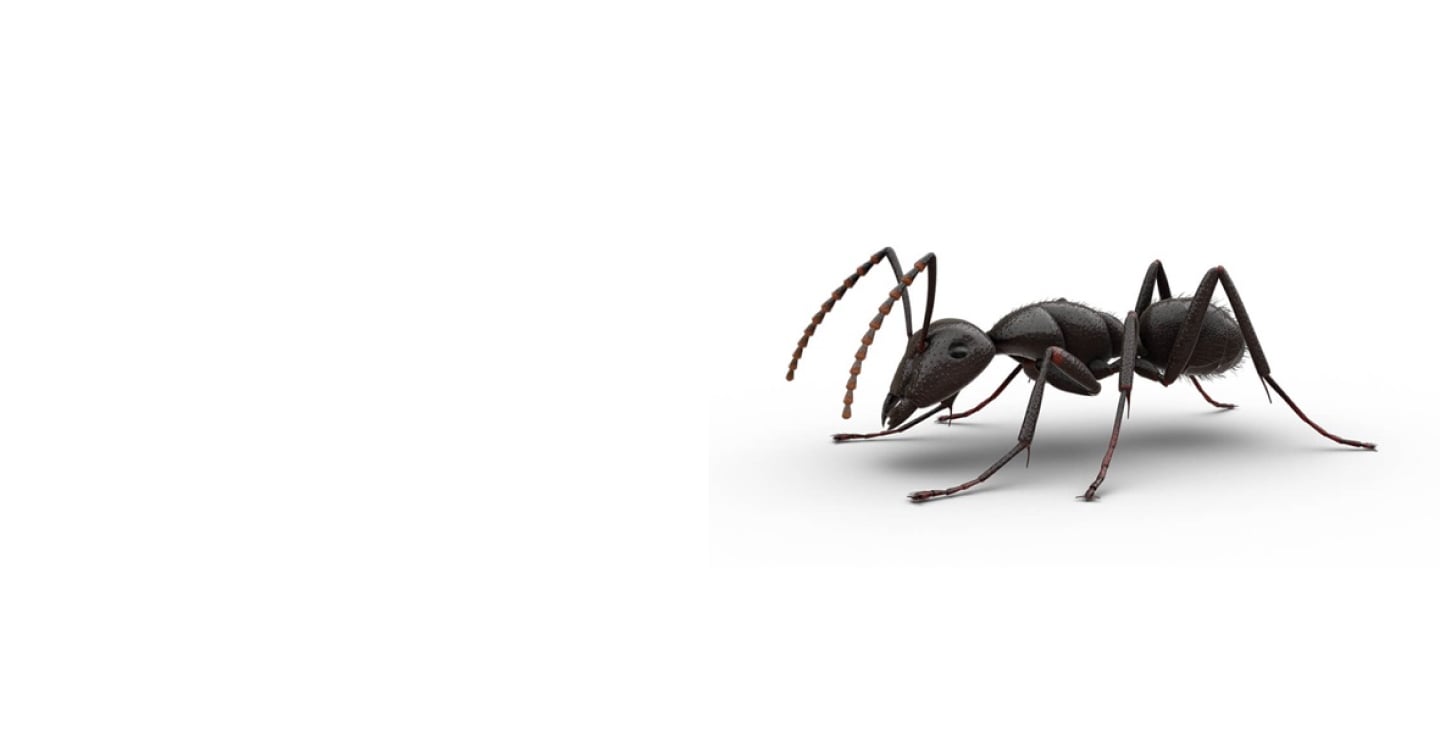
Carpenter Ant Exterminator
Large black ants indoors in spring, a little sawdust under a window: the nest is often inside the structure.
Signs of carpenter ants
- Large black ants, 6 to 13 mm, moving through the house, mostly in the evening and at night
- Small piles of fine sawdust under a window, baseboard or beam, sometimes mixed with insect parts
- Winged ants indoors in late winter or spring: they are coming out of a nest inside the house
- A faint rustling in a wall or floor at night, when the colony is large
- Damp or damaged wood near their trails: window sills, balconies, gallery joists
One or two ants in summer may come from outside. Regular ants indoors in spring, or winged ants before winter is over, almost always mean a nest in the building.
Know the carpenter ant
The carpenter ant is Quebec’s largest ant. Unlike termites, it doesn’t eat wood: it hollows it out for its galleries, preferably where the wood is damp or already softened.
Description
The colony
Where they nest
Season
Damage
Workers are 6 to 13 mm long and vary in size within the same colony. They are black, sometimes reddish, with an evenly rounded thorax in profile and a single node between thorax and abdomen. The 2 to 3 mm ants seen on asphalt and driveways are other species. See carpenter ant vs black ant.
A colony has one queen and can reach several thousand workers after a few years. It often has a main nest outdoors, in a tree, a stump or firewood, and satellite nests in the house, linked by trails. Treating only the ants you see doesn’t solve the problem.
In damp wood: around windows and doors, under a leaking tub or shower, in the joists of a balcony or outdoor staircase, in walls near a water leak, in foam insulation. Houses and plexes with wooden balconies and galleries are especially exposed.
They become active in spring, as temperatures rise, and stay active until fall. Swarms of winged ants come out in spring and early summer. Winged ants indoors in the middle of winter point to a nest in the warmth, inside the house.
Their galleries weaken wood over time. Damage is slow, but a colony settled for years in a damp structure can harm important members. Carpenter ants also often point to a moisture problem that needs fixing.
How we get rid of carpenter ants
Finding the nest. This step decides the outcome. We follow the trails and look for sawdust and damp wood, inside and out.
Treating the colony. Depending on what we find, we treat the nest and trails directly, or use baits that the workers carry back to the colony, all the way to the queen.
Fixing the cause. We point out the damp wood, leaks and vegetation touching the house that need fixing, so the colony doesn’t move back in. Our treatments are guaranteed over a period agreed up front: if the ants come back, so do we.
What you can do
- Fix leaks and water infiltration, and replace rotten wood
- Trim branches touching the roof or walls: ants use them as bridges
- Keep firewood away from the house and don’t bring it in ahead of time
- Leave a gap between mulch and siding
- Don’t spray the ants you see: the colony moves and splits
Read more. See our articles on carpenter ants in wooden homes and costs, signs and solutions.
Carpenter ants: frequently asked questions
How do I recognize a carpenter ant?
By its size, 6 to 13 mm, its black or black-and-reddish colour, and its evenly rounded thorax in profile. The small 2 to 3 mm ants on sidewalks and driveways are other species.
Do carpenter ants eat wood?
Why are there winged ants in my house?
Can I get rid of them myself?
Do they really damage the house?
When should I treat?
Carpenter ants in your home?
Call 514-638-8705 (toll-free: 1-855-472-3352), 24 hours a day, or fill in the form: the estimate is free.