
Pharaoh Ant Pest Control
Pharaoh ant fact sheet
The pharaoh ant, also known as the domestic ant, is a species of ant that is very common in homes in Quebec. They are often considered pests because of their tendency to infest homes in search of food.
Pharaoh ant lifestyle
Physical description
Life cycle
Habitat
Identification
Pharaoh ants live in highly organized colonies led by a queen who lays the eggs. The workers collect food for the colony while the males and future queens are responsible for reproduction.
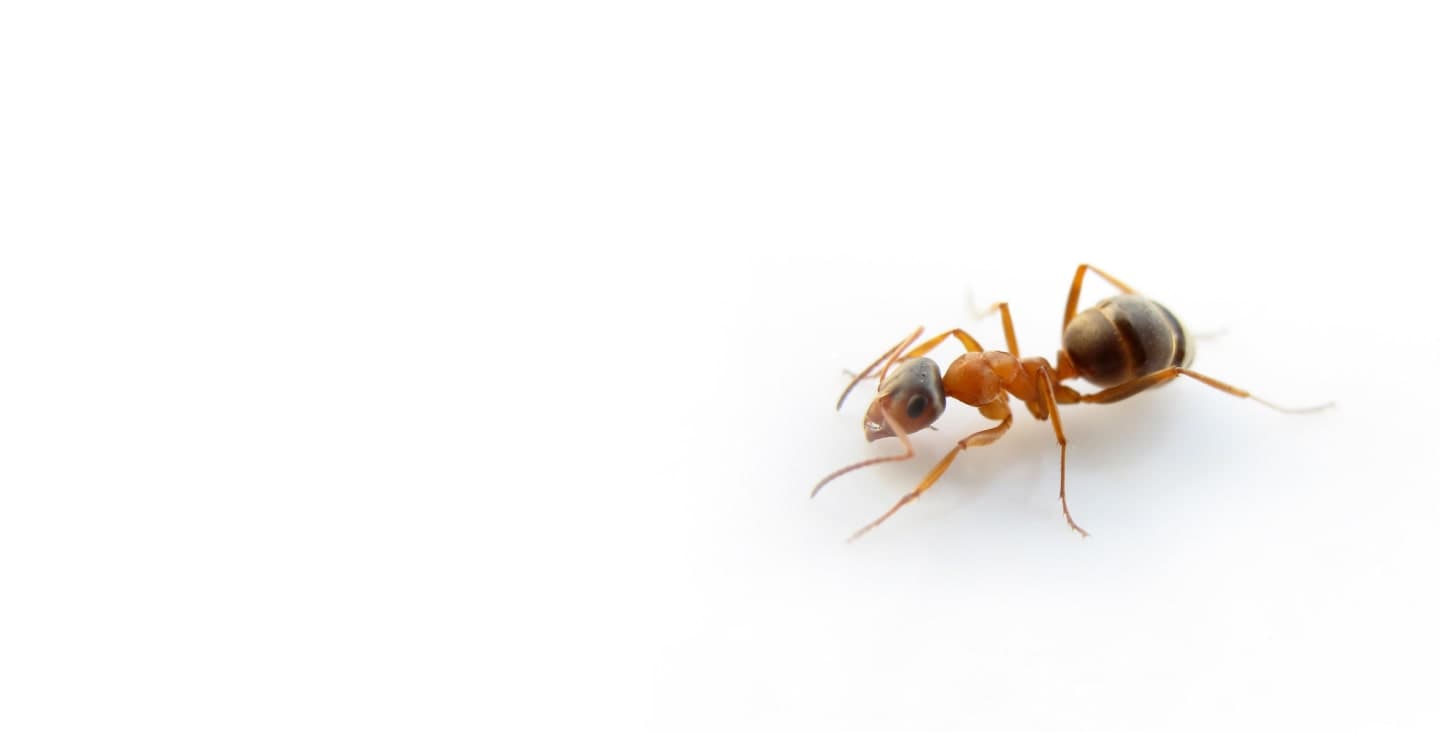
Pharaoh ants are usually 2-4mm long and dark brown in color. They have six legs, an elongated head and a small abdomen.
The life cycle of the pharaoh ant (Monomorium pharaonis) is divided into four main stages: egg, larva, pupa and adult. The eggs, laid by the queen, are oval in shape and white in color. Then the eggs hatch into larvae, which feed and grow for several days before pupating. The nymphs, which look like small wingless ants, undergo metamorphosis inside their cocoon to become adults. Adults can be workers, soldiers, winged males or queens. The workers and soldiers are sterile and take care of the colony’s duties, while the males and queens reproduce to ensure the survival and growth of the colony.
Pharaoh ants can survive in a variety of habitats, ranging from tropical and subtropical to temperate regions. They are uniquely adapted to living with humans and feed on many common human foods.
To identify pharaoh ants, pay attention to their size and color, as well as their behavior in colonies. It is also possible to recognize them by observing their billiard cue leg, their wide thorax and their elongated head.
What products are effective against Pharaoh ants?
There are several products that are effective against pharaoh ants, including pheromone traps, repellents, and insecticides. It’s important to choose a product that’s right for the situation and follow the manufacturer’s instructions for best results.
Can boric acid be used against ants?
Yes, boric acid is often used as a natural insecticide and can be effective against ants, including pharaoh ants. Boric acid works by disrupting the digestive system of ants, which ultimately leads to their death.
To use boric acid against ants, it is common to prepare a bait by mixing boric acid with a food source that is attractive to ants, such as sugar, honey, or corn syrup. Commonly used proportions are around 5-10% boric acid in the mixture. When the workers find the bait, they carry it to their colony and share it with other members, including the queen. This reduces the population of the colony more effectively than simply killing the worker ants.
It is important to note that boric acid can be toxic to humans and pets if ingested in large amounts. So be sure to place boric acid baits out of the reach of children and pets and handle boric acid with care.