
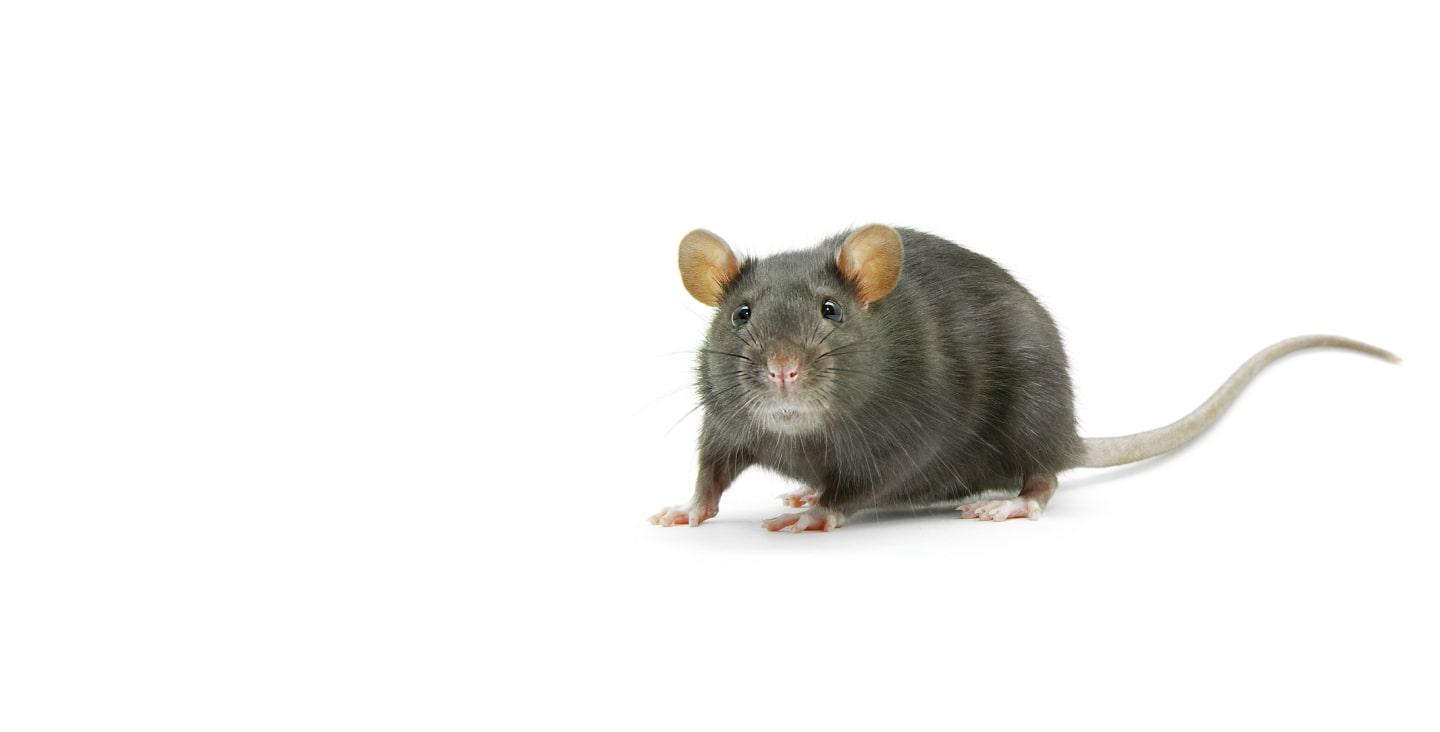
Rat Exterminator
Burrows along the foundation, noises in the basement ceiling: we control the colony and close off the building.
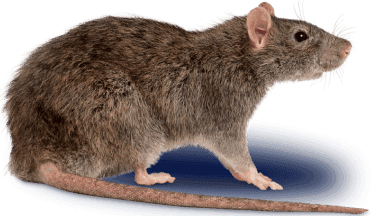
Signs of rats
- Burrows 7 to 10 cm across along the foundation, under a shed, a slab or a composter
- Droppings 1.5 to 2 cm long, capsule-shaped, much larger than mouse droppings
- Dark, greasy marks at the base of walls, on beams and around openings
- Runways worn into grass or soil, always the same, between shelter and food
- Heavy running or gnawing sounds in the basement ceiling or the walls
A rat seen in daylight is a bad sign: it often means the colony is large and competition for food is pushing it out.
Know the Norway rat
In Quebec, the rat found in yards, back lanes and buildings is almost always the Norway rat, or brown rat. It lives in colonies, digs, swims well, and is wary of anything new.
Description
Breeding
Behaviour
Entry points
Risks
The Norway rat is 18 to 25 cm long, not counting the tail, which is shorter than the body. It weighs 200 to 500 g, with grey-brown fur, a blunt snout and small ears. A young rat differs from a mouse by its heavier head and feet relative to its body.
A female is mature at about 3 months. She gives birth to 6 to 12 young after about 3 weeks of gestation, and can have several litters a year. With easy food and shelter, a colony grows very fast.
The Norway rat digs burrows in loose soil, under structures and along foundations. It needs to drink every day and follows the same routes, close to walls. It is wary of new objects: it can circle a trap or station for days before going in, which is why so many do-it-yourself attempts fail.
A rat fits through an opening the size of a quarter. It gets in through foundation cracks, uncovered floor drains, gaps around pipes, ill-fitting garage doors and basement windows. It gnaws wood, plastic and cracked concrete.
Rats contaminate food and surfaces with their urine and droppings, which can carry bacteria such as leptospira and salmonella. They gnaw insulation, wood and electrical wires, a fire risk. Don’t handle a dead rat with bare hands.
How we control rats
The inspection. We locate burrows, runways, entry points and what draws the rats in: food, compost, shelter. The treatment depends on what we find.
Locked stations outdoors. We place locked bait stations along the rats’ routes, out of reach of children and pets. Because rats are wary of anything new, we schedule follow-up visits: control is measured in weeks, not hours.
Sealing the way in. We close openings with materials rats can’t gnaw through, such as metal mesh and mortar, and tell you what needs fixing around the building.
What you can do
- Close garbage cans, the brown bin and the composter with lids that hold
- Don’t leave pet food or bird seed outside
- Pick up fallen fruit and clear wood, debris and dense vegetation away from the foundation
- Put covers on basement floor drains
- Don’t put out poison yourself near the foundation: a rat that dies inside a wall or under a slab is another problem
For businesses and buildings. Restaurants, warehouses and rental buildings benefit from regular monitoring: see our commercial preventive service. Our treatments are guaranteed over a period agreed up front: if the rats come back, so do we.
Rats: frequently asked questions
Rat or mouse: how do I tell?
Size and droppings. An adult rat is 18 to 25 cm long without the tail, a mouse 6 to 9 cm. Rat droppings are 1.5 to 2 cm, mouse droppings 3 to 6 mm. Our article on the differences between voles, mice and rats has more pointers.
Why won’t the rat go into the trap?
Do rats come in through the sewers?
Does compost attract rats?
Are rats dangerous?
How long does it take to get rid of rats?
Rats around your home?
Call 514-638-8705 (toll-free: 1-855-472-3352), 24 hours a day, or fill in the form: the estimate is free.