
Introduction
Mouse infestations are a well-known reality for both homeowners and business owners in Quebec. Often more discreet than insects, mice still leave behind clear signs of their presence. One of the most obvious signs is the appearance of droppings. Learning to spot them early allows for quick action to stop an infestation before it becomes serious.
In this article, we’ll show you what mouse droppings look like, where they are most often found, how to tell them apart from other pests, the health risks involved, and what steps to take if you spot them in your home or business.
Why Identify Mouse Droppings
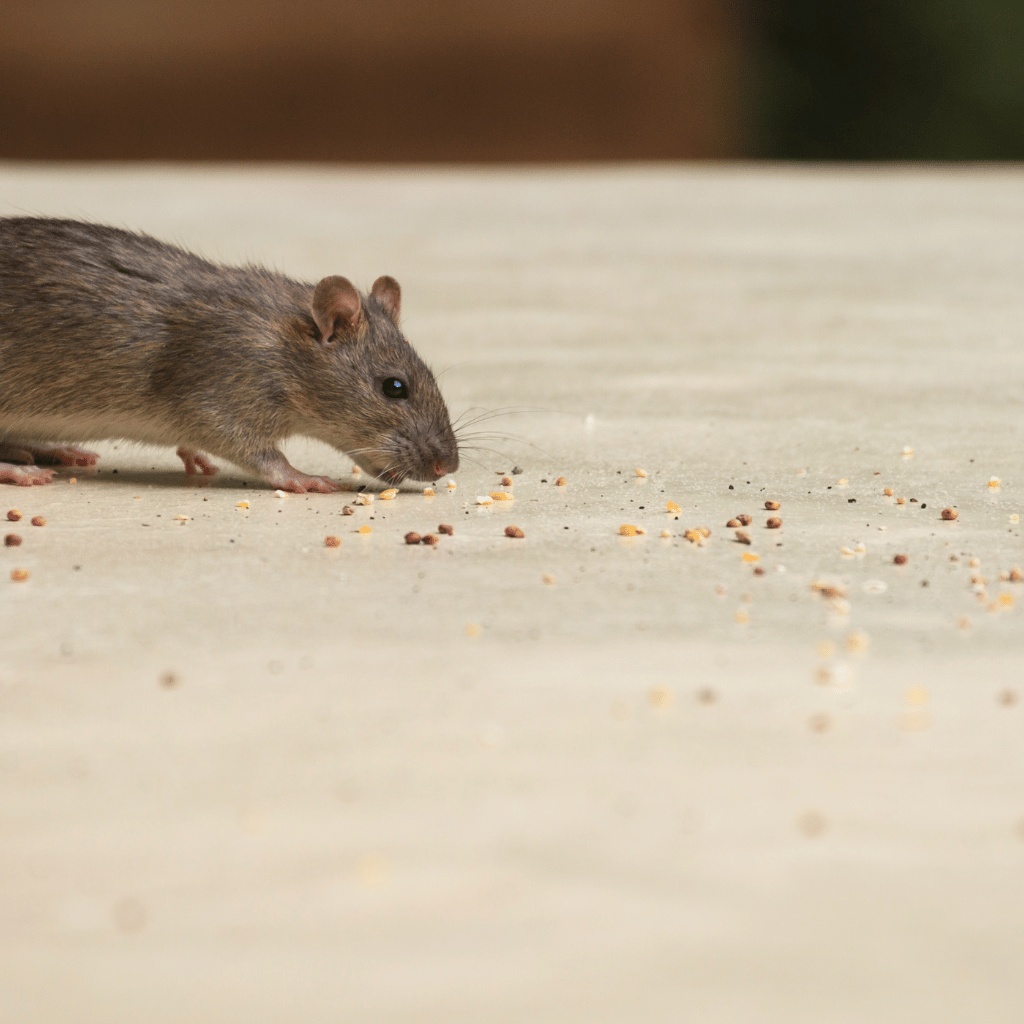
The house mouse (Mus musculus) is very common in Quebec, especially during the colder months. It enters homes and businesses in search of warmth and food. Unlike noises in the walls, droppings are visible to the naked eye and offer clear proof of rodent activity.
The faster you identify these droppings, the sooner you can act — preventing the mice from multiplying and contaminating food or surfaces.
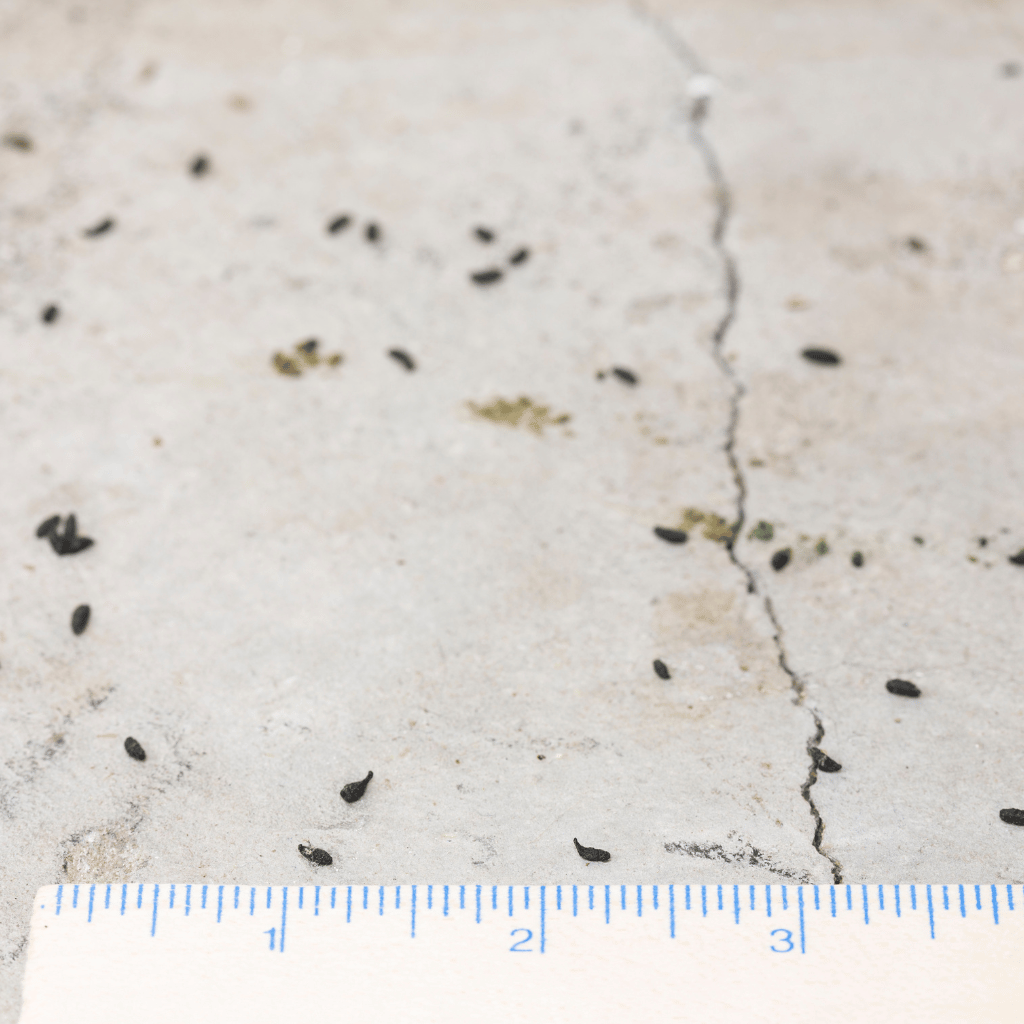
Detailed Description of Mouse Droppings
Once you know what to look for, mouse droppings are fairly easy to identify. Here’s what to observe:
- Shape: elongated, slightly pointed at both ends.
- Colour: dark brown to black, darker when fresh.
- Length: around 3 to 6 mm — about the size of a grain of rice.
- Texture: soft when freshly dropped, hardens within a few hours.
A single mouse can produce 40 to 100 droppings a day. That means even a small infestation can result in dozens or hundreds of droppings scattered throughout your home or commercial space.
Where Droppings Are Commonly Found
Mouse droppings are typically found in dark, quiet areas close to food or heat sources. Common places include:
- Along walls (mice rarely run through open spaces).
- Behind appliances like fridges, stoves, or dishwashers.
- In kitchen cabinets, especially under sinks or bottom drawers.
- In pantries, near cereal boxes or food bags.
- In attics, crawl spaces, or drop ceilings.
- Under floors or ceilings in commercial spaces, particularly near plumbing or electrical conduits.
The pattern of the droppings is also revealing: scattered droppings often indicate recent movement, while clustered droppings suggest a nest or regular feeding area.
How to Tell Droppings Apart
It’s common to mistake mouse droppings for other pests. Here’s how to tell the difference:
Cockroaches
- Very small (under 2 mm).
- Granular or powdery, often clustered in tight spots.
Rats
- Larger (1–2 cm) and thicker.
- Similar shape, but significantly bigger than mouse droppings.
Deer Mice (Field Mice)
- Similar in shape but generally larger than house mouse droppings.
- More common in rural homes, cabins, or wooded areas.
If in doubt, collect a small sample in a sealed plastic bag (wear gloves) and consult a pest control expert for proper identification.
Health Risks Associated with Droppings
Aside from being unpleasant, mouse droppings pose real health risks. They can:
- Contain harmful bacteria like Salmonella.
- Trigger allergic reactions, especially in children.
- Carry viruses such as hantavirus, especially when dried and dispersed through air vents.
In food-related businesses, the presence of droppings can lead to temporary closures, fines, or lost hygiene certifications.
What to Do If You Find Them
Here are the recommended steps after finding droppings:
1. Do Not Sweep or Vacuum Dry
Use a damp cloth or paper towel soaked in disinfectant. Sweeping or vacuuming dry can release harmful particles into the air.
2. Wear Gloves and a Mask
Always use disposable gloves. If you have asthma or a weakened immune system, contact a pest control professional.
3. Discard Contaminated Food
Any food that came into contact with droppings should be thrown out — even if it’s still sealed. Clean nearby surfaces with a disinfecting solution.
4. Inspect the Area
If you’ve found droppings, there’s likely an entry point. Check walls, corners, attics, and pipes for more signs like grease marks, nests, or noises.
Prevention Tips
Once everything is cleaned, follow these steps to prevent re-infestation:
- Seal cracks around foundations, doors, windows, and pipes.
- Store food in airtight containers.
- Don’t leave crumbs or organic waste exposed (compost, food bags).
- Inspect high-risk areas regularly, especially in the fall.
- Use preventive traps in warehouses or quiet zones.
When to Call a Specialist
Consider professional help if:
- You repeatedly find droppings even after cleaning.
- You hear noises in walls or ceilings.
- You notice nesting signs or nocturnal activity.
A pest control expert can set up an action plan, place effective traps, identify entry points, and recommend proper sealing solutions for your home or business.
Conclusion
Being able to recognize mouse droppings is a valuable skill for any Quebec homeowner or business owner. Often, it’s the first visible clue that a bigger problem is developing. By learning to identify them properly, you can act quickly, limit damage, and protect your household or customers’ health.
In any case, regular inspection and good hygiene habits are your best defence. And if in doubt, it’s always better to consult a specialist before a few droppings turn into a full-blown infestation.