
You’ve found small white larvae in your kitchen, near your trash can or in your bathroom — and you want to get rid of them as quickly as possible. These larvae are maggots: the larval stage of common flies that have found a suitable spot to lay their eggs in your home. The good news is that an infestation can be dealt with effectively if you act quickly and in the right places. Here’s how.
Why Are There Maggots in My House?
The Most Common Sources
Before taking action, it helps to understand where these larvae are coming from. It’s not a matter of bad luck: their presence always means that a female fly has found a convenient spot to lay her eggs.
Flies lay their eggs on decomposing organic matter. Inside a home, the most common culprits are:
- The kitchen garbage bin — especially if bags aren’t changed frequently or the bin isn’t washed regularly
- Forgotten food scraps — behind or under an appliance, at the back of a cupboard, in a poorly sealed container
- Kitchen or bathroom drains — the biofilm that builds up in drain traps is an ideal breeding ground for certain fly species
- Indoor compost bins — if the lid isn’t airtight or the contents aren’t emptied often enough
- Pet food left out in the open, especially wet food
A single female fly can lay up to 150 eggs at once. Under favourable conditions — heat and humidity — those eggs hatch in under 24 hours. That’s why an infestation can seem to appear overnight.
Conditions That Favour Their Appearance in Quebec
In Quebec, fly maggot infestations are most common between June and September, when indoor temperatures rise and windows stay open. Heat speeds up larval development and makes it easier for adult flies to enter homes.
Homes near wooded areas or gardens with outdoor composting — such as in the Vaudreuil-Dorion, Saint-Lazare or Châteauguay areas — are more exposed to certain fly species that can find their way indoors in search of food.
How to Get Rid of Them Quickly
The priority is to act fast. The longer the larvae have to develop, the harder the colony is to eradicate.
Immediate Steps to Take Right Now
1. Locate and eliminate the source. This is the most important step. As long as the decomposing organic matter is present, the larvae will keep coming back. Check systematically: garbage bin, under the sink, back of cupboards, compost bin, pet food bowls. Remove any visible food waste and place it in a sealed bag before disposing of it outside.
2. Clean the area with hot water and soap. Once the source has been removed, wash the affected surface with hot soapy water. Very hot water — straight from the tap at full heat is enough on most surfaces — kills larvae on contact and breaks down the organic residue that attracts them.
3. Treat the drains if needed. If the larvae are coming from a kitchen or bathroom drain, slowly pour boiling water into the drain to destroy the built-up biofilm. Do this in the evening so it can work overnight, and repeat for two or three days in a row. Note: this method is not suitable for PVC pipes — use very hot but not boiling water in that case.
4. Clean your garbage bin. Empty the bin completely, remove the bag, then wash the inside with hot water and a disinfectant. Let it dry before putting in a new bag. A damp bin encourages flies to lay eggs even after a cleaning.
Deep Cleaning the Affected Areas
Once the larvae have been eliminated, a thorough cleaning of the affected areas is essential to avoid a quick recurrence.
Move appliances — refrigerator, dishwasher, stove — to clean underneath and behind them. These areas accumulate food residue that is invisible day to day but very attractive to flies. Also clean the rubber seals on the refrigerator and dishwasher, where organic matter easily works its way in.
Then disinfect the surfaces with a suitable household product. Regular cleaning of surfaces that come into contact with organic matter significantly reduces the health risks associated with insects and their larvae.
Natural Methods: What Actually Works
Some natural methods are genuinely effective as a complement to cleaning. Others are overrated.
What works:
- Diluted white vinegar (1 part vinegar to 1 part water) — a good cleaning agent on hard surfaces, helps dissolve organic residue and alters surface pH, discouraging egg-laying
- Baking soda + vinegar in drains — produces a reaction that helps dislodge biofilm inside pipes
- Very hot water — effective and residue-free on non-porous surfaces
What doesn’t work on its own: salt, essential oils and diatomaceous earth can complement an approach, but they won’t resolve an active infestation if the source hasn’t been eliminated first.
How to Prevent Them from Coming Back
Waste Management and Kitchen Hygiene
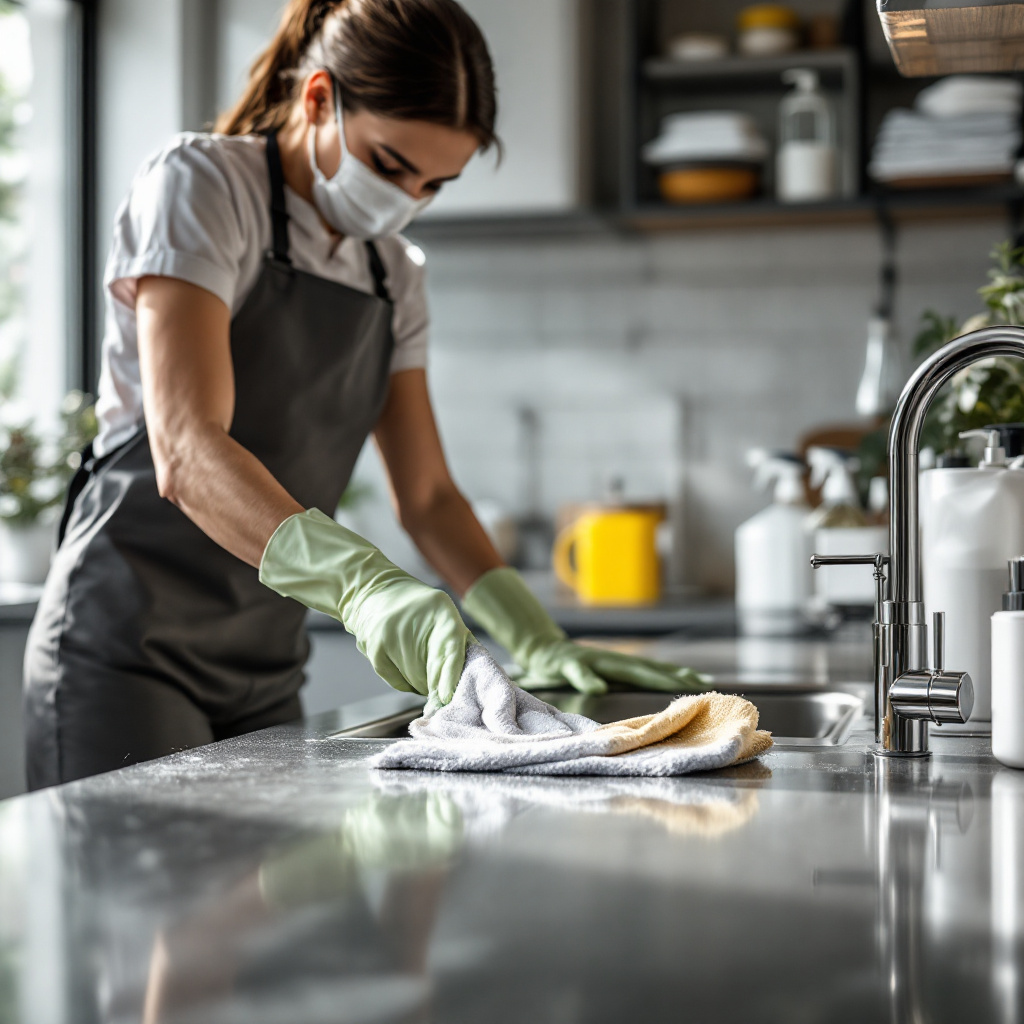
Once the situation is resolved, a few habits are enough to prevent recurrences:
- Empty the garbage bin at least every two days in summer, especially if it contains meat, fish or fruit scraps
- Use a bin with an airtight lid for food waste
- Don’t leave food out in the open — a bowl of overripe fruit, uncovered leftovers, wet pet food
- Clean regularly under and behind appliances — once a month in summer is enough to eliminate invisible build-up
- Rinse containers before recycling them — leftover sauce or juice attracts flies even in the recycling bin
Blocking Fly Entry Points
Maggots don’t arrive on their own — they come from eggs laid by adult flies that have entered the home. Limiting their access is how you prevent infestation at the source:
- Install or check window screens on frequently opened windows and doors
- Repair cracks around window frames and door surrounds
- Check drain traps — if a drain goes unused for a long time, the water evaporates and the passage becomes accessible to insects
For further guidance, the Quebec government’s recommendations for controlling unwanted insects in the home provide a comprehensive list of preventive measures tailored to Quebec households.
It’s also worth reviewing some common mistakes that attract pests — everyday habits can create conditions that favour insects without you realizing it.
How to Identify Fly Maggots
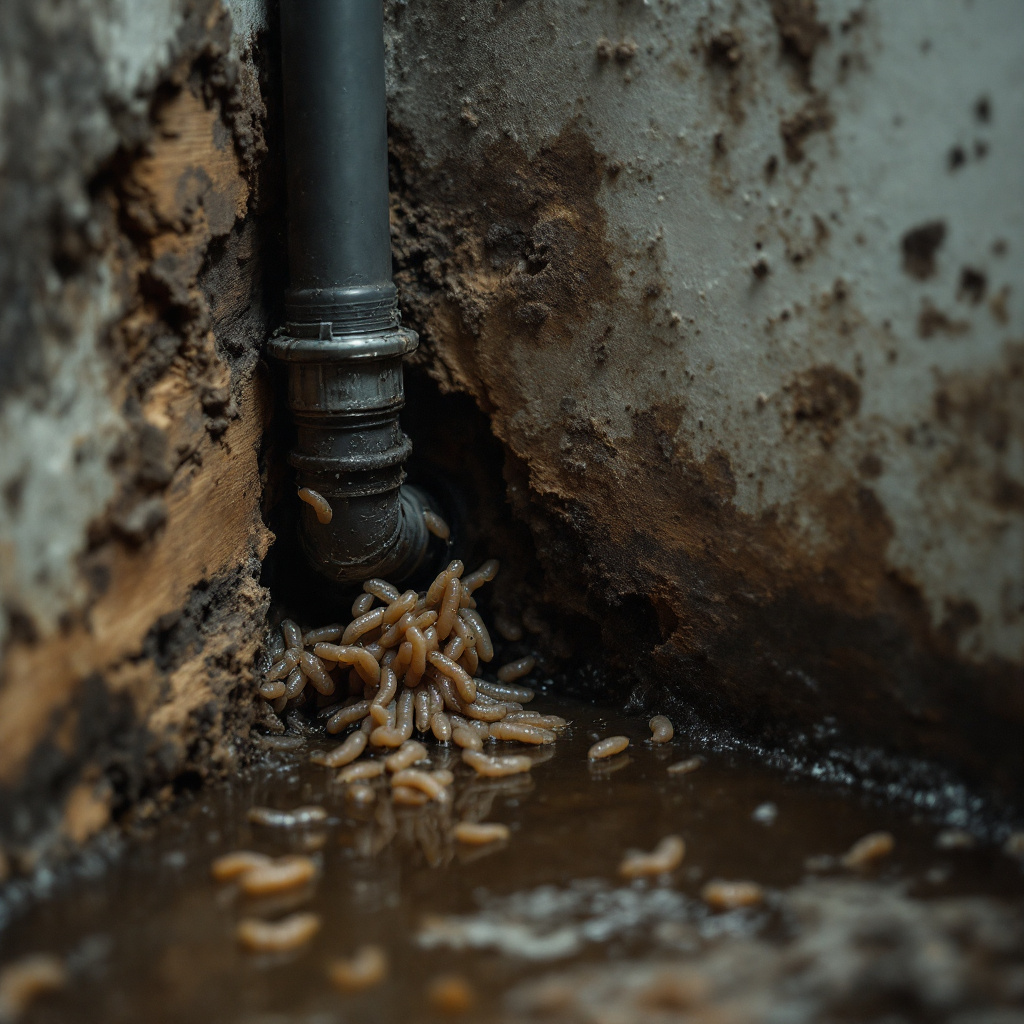
Maggots are easy to recognize: soft, elongated, legless bodies, cream to off-white in colour, with one pointed end and one rounded end. They measure from a few millimetres to about 1 cm depending on their stage. They always cluster near their food source.
If the larvae are found in dry goods — flour, cereals, spices — they are probably not maggots but pantry moth larvae, a different problem that requires a different approach. Fly maggots are always found near moist decomposing matter, never in intact dry products.
When to Call an Exterminator
In most cases, a fly maggot infestation can be resolved with the steps described above. But some situations warrant calling in a professional:
- Larvae keep coming back despite thorough cleaning — this may indicate a hidden source inside walls, under the floor or in an inaccessible drain
- You notice a large number of adult flies indoors, suggesting an established colony
- The larvae are coming from a dead animal inside a wall or crawl space — a situation that requires professional location and removal
- You live in a multi-unit building where the problem extends beyond your own unit
An exterminator can pinpoint the source accurately, treat inaccessible areas and carry out a professional inspection to address what surface cleaning cannot reach.
Conclusion
Fly maggots in a home are unpleasant, but they can be dealt with effectively by acting on two fronts: eliminating the immediate source and correcting the conditions that allowed them to appear. Hot water, thorough cleaning and a few adjustments to waste management are enough in the vast majority of cases.
If the problem persists or recurs, a professional inspection makes it possible to target what surface cleaning cannot reach.
FAQ
Why Are There Maggots in My House with No Visible Source?
The source is often hidden: behind an appliance, inside a drain, under the floor or in a forgotten corner of a cupboard. It may also be a dead animal inside a wall or crawl space. If you find nothing after a thorough inspection, it may be worth consulting a professional.
Are Fly Maggots Dangerous to Health?
They don’t sting or bite directly. However, their presence indicates potential bacterial contamination in the affected areas, and the adult flies that emerge from them can contaminate food. It’s therefore important to act quickly and thoroughly disinfect the affected areas.
How Long Does It Take to Eliminate a Fly Maggot Infestation?
If the source is identified and eliminated on the first day, the visible larvae can be eradicated within 24 to 48 hours. A thorough cleaning followed by preventive measures should be enough to avoid any recurrence in the weeks that follow.
Does Bleach Kill Maggots?
Yes, a diluted bleach solution is effective on larvae on contact. It can be used to disinfect surfaces after removing the larvae and cleaning with hot water. Make sure the room is well ventilated and never mix bleach with vinegar or other household products.
Can Fly Maggots Come from Drains?
Yes. Certain fly species — notably drain flies or moth flies (psychodids) — lay their eggs in the biofilm that builds up in drain traps. The resulting larvae sometimes make their way up to the sink. Regular cleaning of drains with very hot water or a baking soda and vinegar solution prevents this type of infestation.
Can Maggots Come from Outside?
Indirectly, yes. Maggots themselves don’t travel far, but the adult flies that lay them can easily enter through open windows, damaged screens or cracks around door frames. That’s why blocking entry points is an essential part of prevention.