
Table of Contents
House fleas are a common challenge for homeowners across Quebec. Tiny, fast, and extremely resilient, they can take over a home in just a few days. Whether you have pets or not, these parasites can quickly settle into your carpets, furniture, and floors. This complete guide explains how to identify, treat, and prevent a flea infestation effectively and sustainably.
Understanding the Flea Problem
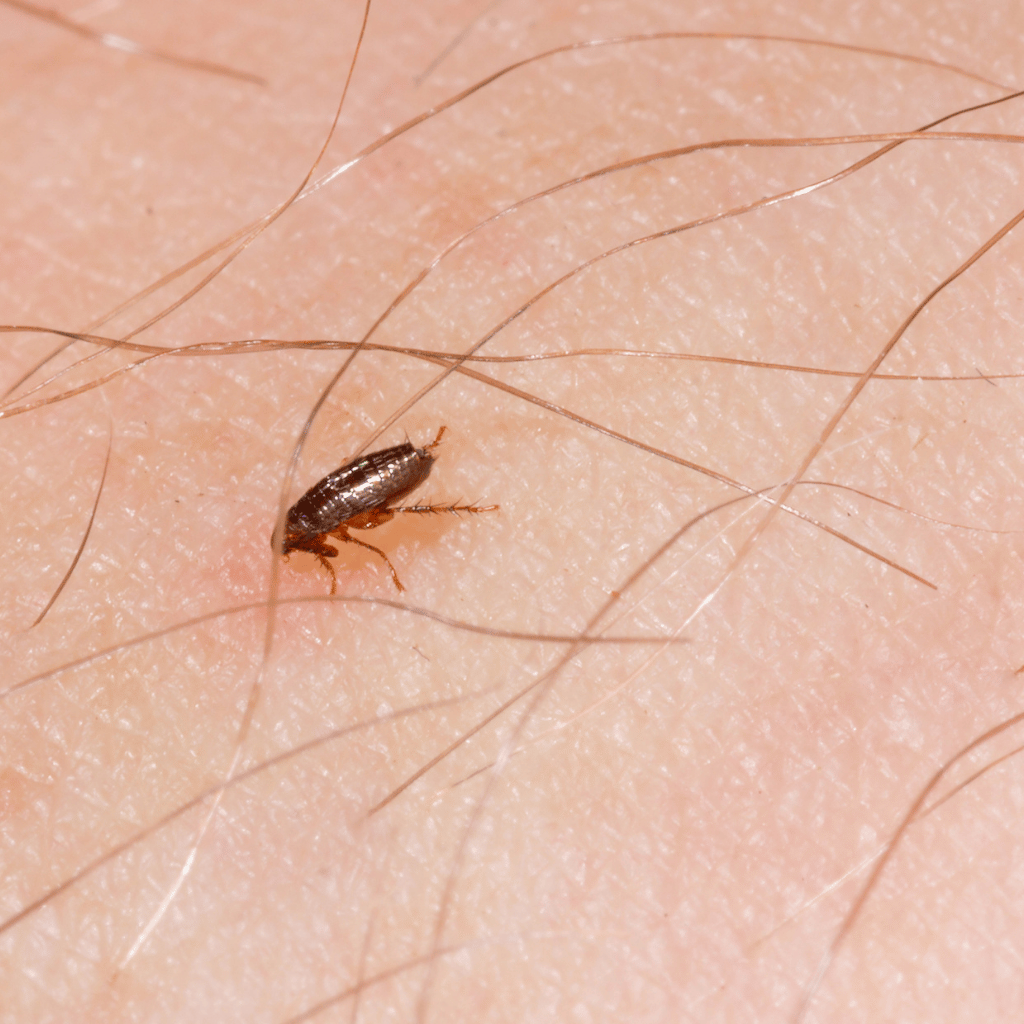
Fleas are small blood-feeding insects that live off animals — and, if necessary, humans. Measuring only 2 to 3 mm, they move using their powerful jumping legs. Unlike many other pests, they cannot fly, but they can jump up to 30 cm high!
The most common species are the cat flea (Ctenocephalides felis) and the dog flea (Ctenocephalides canis). Both can infest homes. Once inside, they lay eggs in carpets, cracks in the floor, or bedding, quickly spreading throughout the house.
Why Do Fleas Invade Our Homes?
Fleas thrive in warm, humid environments that promote their reproduction. In Quebec, flea infestations tend to increase in the fall when heated homes provide the perfect temperature and humidity for their development. Even without pets, fleas can enter your home through clothing, visiting animals, or contaminated objects.

Signs of a Flea Infestation
Symptoms in Humans and Pets
The first signs usually appear on pets: excessive scratching, restlessness, hair loss, or redness. In humans, flea bites appear as small red bumps grouped around the ankles, legs, or lower back.
Signs in the Home
Fleas leave subtle clues — tiny black specks (their droppings) on fabrics, whitish eggs in corners, or small insects jumping on your bedding or carpet. Your pet’s resting areas are often the most infested.
To confirm their presence, place a white sheet of paper near a suspicious area and comb your pet over it. If small black particles fall and turn red when moistened, you’re dealing with flea feces containing digested blood.
Health Risks and Transmissible Diseases
Fleas do more than cause itching — they can also transmit diseases. They spread bartonellosis (or “cat scratch disease”) and, less commonly, intestinal parasites such as tapeworms. In pets, flea bites can cause flea allergy dermatitis (FAD), a painful allergic reaction that requires professional treatment.
For more information about flea-related health risks and prevention, visit Health Canada – Fleas.
Flea Life Cycle and Rapid Reproduction
The flea life cycle has four stages: egg, larva, pupa, and adult. This cycle can last anywhere from two weeks to several months, depending on temperature and humidity. A single female flea can lay up to 50 eggs a day, explaining how infestations can spread so quickly.
Eggs fall off pets into their surroundings — carpets, pet beds, cracks, etc. Within days, larvae hatch and develop into adults ready to infest new hosts. Because of this, surface treatments alone aren’t enough — you must eliminate fleas at every stage of their life cycle.
Methods and Treatments Against Fleas
Step 1: Deep Cleaning Your Home
Start by vacuuming all surfaces, including carpets, floors, and hard-to-reach areas. Wash bedding, blankets, and textiles in hot water. Replace or thoroughly clean pet bedding and toys.
Step 2: Treating Your Pets
Consult your veterinarian for an appropriate flea treatment for your pets (spot-on treatments, tablets, shampoos, or flea collars). These products target adult fleas and, in some cases, prevent reproduction. Avoid unapproved home remedies — some can be toxic to cats and dogs.
Step 3: Chemical or Natural Treatment for the Home
Over-the-counter flea treatments can help, but their effectiveness is limited. Professional exterminators use approved insecticides combined with growth regulators that kill adult fleas, eggs, and larvae. Other methods, such as heat or steam treatments, offer eco-friendly alternatives without chemicals.
For a complete overview of professional approaches, visit our comprehensive guide to getting rid of house fleas.

How to Prevent Reinfestation
Cleaning and Hygiene Habits
Even after elimination, maintaining strict hygiene is crucial. Vacuum regularly, wash fabrics in hot water, and inspect pet areas frequently. Continue regular flea prevention for your pets, especially during spring and fall.
Practical Tips and Official Resources
For official advice on insect bite and pest prevention, visit the Public Health Agency of Canada.
When to Call for Professional Treatment
If, despite your efforts, bites persist or fleas reappear after a few days, it’s time to call a professional. Exterminators use approved products and implement a comprehensive plan to eliminate fleas at the source — identifying nests, treating affected surfaces, and preventing recurrence.
Integral XT provides specialized treatments for homes, condos, apartment buildings, and commercial spaces. For more details about our residential pest control services, visit our dedicated page.
Why Choose Integral XT
With years of experience across Greater Montreal, Integral XT offers an integrated, eco-friendly approach to pest control. Our certified technicians evaluate the extent of the problem and use safe, government-approved methods. We guarantee long-term results and provide personalized follow-ups after every visit.
Frequently Asked Questions (FAQ)
How long does it take to eliminate fleas?
A full treatment typically takes between 2 and 4 weeks, depending on the life cycle and environmental conditions.
Can fleas survive without animals?
Yes. They can live up to two months without a host, hiding in carpets, cracks, or fabrics.
Do natural flea remedies really work?
Natural repellents like white vinegar or diatomaceous earth may reduce flea activity, but they won’t completely eliminate an infestation. Professional treatment remains the most effective long-term solution.