
You’ve spotted a cockroach in your kitchen or basement and aren’t sure exactly which species you’re dealing with. In Montreal, three species are commonly found in residential buildings — each with its own habits, preferred hiding spots and distinctive signs. Identifying them correctly is the first step toward assessing the situation and deciding what to do.
Why Are Cockroaches Found in Montreal?
A Favourable Urban Environment
Montreal’s housing stock — largely made up of duplexes, triplexes and multi-unit apartment buildings constructed before the 1970s — provides cockroaches with numerous entry points: foundation cracks, shared plumbing lines, wall cavities and common passageways between units. These insects move easily from one apartment to the next without ever going outside.
Quebec’s moving season, heavily concentrated around July 1st, is also a key factor in their spread. Furniture or cardboard boxes from an infested unit can introduce cockroaches — or their egg cases — into a new apartment without the incoming tenant ever noticing.
According to surveys conducted by the Montreal Regional Public Health Department, approximately 3% of Montreal households reported having cockroaches in 2018. Their presence is not a reflection of poor hygiene — it is a reality of dense urban living.
Montreal’s Climate as a Contributing Factor
Harsh winters don’t slow cockroaches down — if anything, they drive them indoors. In heated buildings, they remain active year-round, reproducing near appliances, pipes and other warm spaces. In summer, the heat and high humidity accelerate their reproductive cycle, particularly in poorly ventilated basements and bathrooms. There is no risk-free season in the Montreal context.
The Three Most Common Species in Montreal
Montreal is home to three main cockroach species. Each has its own characteristics, habits and preferred environments. Knowing them helps you identify what you’re dealing with more quickly.
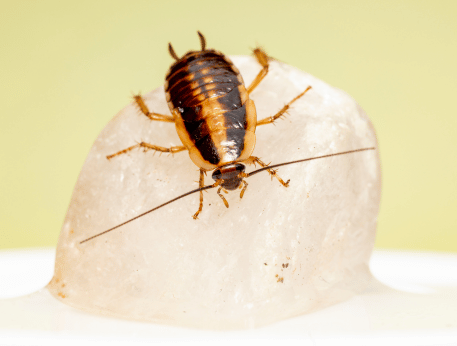
The German Cockroach (Blattella germanica)
This is the most frequently encountered species in Montreal homes. It measures between 1.3 and 1.6 cm in length. Its body is pale brown, with two distinct dark parallel stripes on the pronotum — the plate just behind the head.
Habits: The German cockroach thrives in warm, humid environments. It is most commonly found in kitchens and bathrooms, near food and water sources. It is omnivorous: crumbs, food residue, paper, soap — almost nothing is off-limits.
Life cycle: This species reproduces quickly. A single female can produce multiple egg cases in her lifetime, each containing between 30 and 40 eggs. Nymphs reach maturity in approximately 60 days. Left untreated, an infestation can grow exponentially.
The American Cockroach (Periplaneta americana)
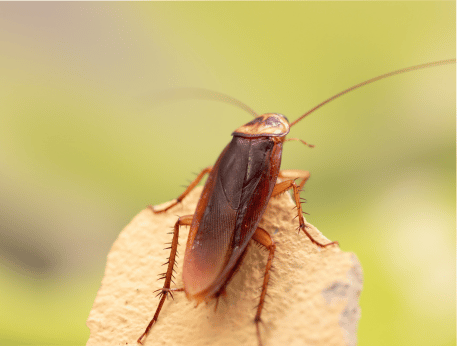
The American cockroach is the largest of the three species found in Montreal, measuring between 2.8 and 4 cm in length. Its body is reddish-brown with a pale yellow outline around the pronotum. It can fly short distances but primarily travels on foot at speed.
Habits: It favours dark, warm and humid environments: basements, sewers and drainage systems. It is more commonly found in multi-unit buildings and commercial establishments than in single-family homes. It is omnivorous and can feed on decomposing matter.
Life cycle: Its reproductive cycle is slower than that of the German cockroach. Females produce egg cases containing 12 to 16 eggs, and nymphs take between 6 and 12 months to reach maturity.
The Oriental Cockroach (Blatta orientalis)
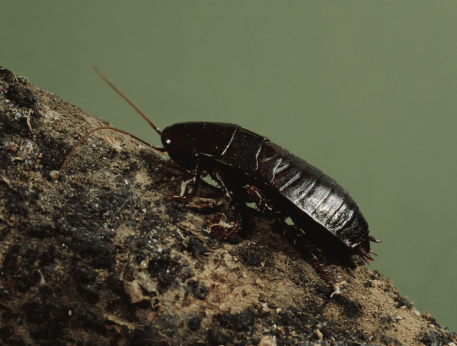
The Oriental cockroach measures between 2.5 and 3 cm in length. It is dark brown to black in colour, with a stockier build than the other two species. This is the one most commonly referred to as the “black cockroach.”
Habits: It prefers cool, damp environments such as basements, cellars and hollow wall cavities. Unlike the German cockroach, it tolerates cooler temperatures and can survive outdoors in harsher conditions.
Life cycle: Females produce egg cases containing approximately 16 eggs. Nymphs take close to a year to reach maturity. Although it reproduces more slowly, its resilience in difficult conditions makes it a particularly stubborn pest.
Comparison Table: The Three Species
| Characteristic | German | American | Oriental |
|---|---|---|---|
| Size | 1.3 – 1.6 cm | 2.8 – 4 cm | 2.5 – 3 cm |
| Colour | Pale brown + stripes | Reddish-brown | Dark brown to black |
| Preferred area | Kitchen, bathroom | Basement, sewers | Cool cellar, basement |
| Reproductive speed | Very fast (60 days) | Slow (6–12 months) | Slow (~1 year) |
| Active in winter | Yes (heated indoors) | Yes (heated indoors) | Yes + outdoors possible |
How to Identify an Infestation
Common Signs to Look For
Spotting a cockroach during the day is often the first warning sign. These insects are nocturnal by nature — daytime sightings typically indicate that their usual hiding spots are overcrowded. Other signs can confirm an infestation:
- Droppings: small black specks resembling ground pepper, visible near food sources or along baseboards.
- Egg cases (ootheca): dark brown capsules deposited in hidden corners — behind appliances, in cracks.
- Shed skins: empty casings left behind by growing nymphs.
- Odour: a significant infestation produces an oily or slightly musty smell caused by the pheromones cockroaches use to communicate.
Differentiating Species by the Evidence Left Behind
The traces each species leaves can help you identify them without seeing them directly. German cockroach droppings are small and resemble pepper specks, while American cockroach droppings are larger and cylindrical. Location is also telling: signs found in a cool, unheated cellar or basement point more strongly toward the Oriental cockroach, while traces in a kitchen cupboard suggest the German variety.
Areas to Monitor in Your Home
Certain areas of your home concentrate the greatest risk — heat, moisture and food access all in one place. Here is where to focus your attention first:
- Kitchen: under the sink, behind and beneath appliances, inside cupboards, around garbage bins.
- Bathroom: behind the toilet, under the sink, around pipes and silicone joints.
- Basement: in storage areas, laundry rooms, around pipes and ducts.
- Hidden spaces: behind walls, in cracks, behind baseboards, in poorly sealed joints.
If you find signs of an infestation, acting quickly is essential. Our article on immediate steps to take when you find a cockroach walks you through what to do.
Conclusion
Identifying the species present in your home is an essential step in assessing the scope of the problem and choosing the right course of action. Whether you’re dealing with a German cockroach in your kitchen, an American cockroach in your basement or an Oriental cockroach in your cellar, one thing remains constant: the earlier you act, the easier it is to regain control. If you’re unsure about the extent of the infestation, the Integral XT team is available for a professional assessment.
Frequently Asked Questions (FAQ)
Why Do I Have Cockroaches in My Montreal Home?
The presence of cockroaches does not reflect the cleanliness of your home. In Montreal, they spread easily between units through shared ducts, cracks and common building spaces. They can also be introduced through cardboard boxes, second-hand furniture or grocery bags coming from an infested location.
How Big Is a Cockroach?
Size varies by species. The German cockroach, the most common in residential buildings, measures between 1.3 and 1.6 cm. The American cockroach can reach up to 4 cm. The Oriental cockroach falls in between, at around 2.5 to 3 cm.
Is the Black Cockroach Dangerous?
What people commonly call the “black cockroach” is typically the Oriental cockroach. Like all cockroaches, it can carry pathogens and contaminate surfaces or food. It can also trigger allergic reactions in some individuals. Its presence warrants prompt action.
When Are Cockroaches Most Active?
Cockroaches are active year-round in heated buildings. In summer, heat and humidity accelerate reproduction — infestations are more frequent between June and September. In winter, they remain confined to warm indoor spaces but continue to reproduce.