
Ants are among the least desired visitors in our homes, but unfortunately, they are also some of the most frequent. Whether searching for food, shelter, or warmth, these tiny intruders often find their way into our living spaces. Understanding why and how they enter can be the key to effectively controlling them without unnecessary alarm.
Understanding ants
Ants may all seem similar at first glance, but several species are likely to settle in our homes. Among the most common are carpenter ants, attracted to damp wood, and pharaoh ants, which prefer warm environments like kitchens.
These insects are primarily drawn to food. Uncleaned crumbs, spilled sugary substances, and even grease leftovers can serve as a feast for ants. Additionally, their need for water often leads them to colonize damp areas of the house, such as bathrooms and basements. By understanding these behaviors, you can better prepare your home against their intrusion.
Ants in Quebec are numerous and varied, each with unique behaviors and preferences. Knowing them better is essential for effectively identifying and managing infestations. Here’s an overview of the most common species in the region:
1. Carpenter ants
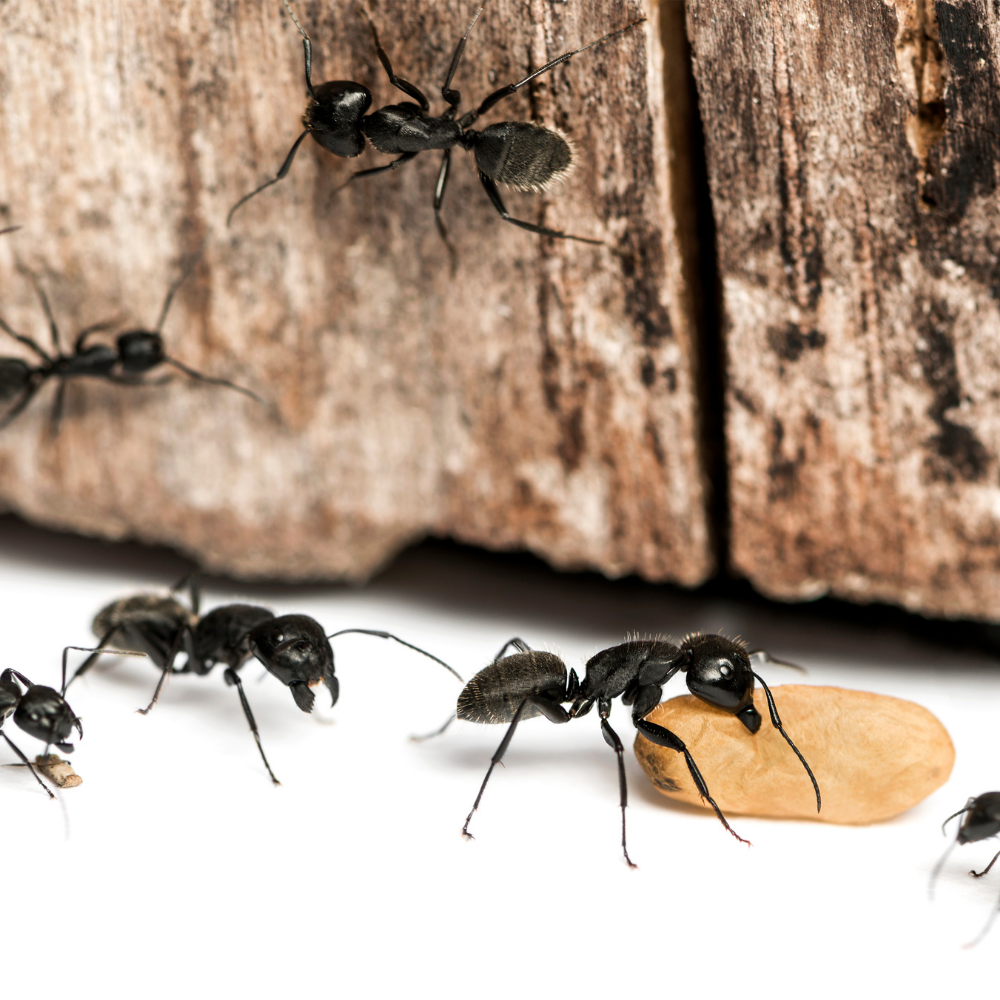
Carpenter ants are among the most feared due to the damage they can cause to building structures. They are attracted to damp or decaying wood, where they carve galleries to establish their colony.
- Characteristics: Large size (6 to 12 mm), typically black or brown.
- Habitat: Damp areas like basements, damaged walls, or near water leaks.
- Risk: They don’t eat wood but can weaken structures through their tunneling.
2. Pharaoh ants
These tiny yellow or light brown ants are particularly problematic indoors. They easily colonize homes, especially kitchens and bathrooms.
- Characteristics: Size of 2 to 3 mm, with a preference for warmth and humidity.
- Habitat: Warm and humid areas such as cupboards, near pipes, or in wall cracks.
- Risk: Their rapid reproduction can lead to a major infestation in a short time.
3. Black ants
Field ants (commonly called black ants) are probably the most visible in Quebec. Although they are primarily outdoor insects, they can easily enter homes in search of food.
- Characteristics: Size of 3 to 5 mm, uniform black color.
- Habitat: Outdoor nests in soil, lawns, or under stones. They enter homes when they detect a food source.
- Behavior: Opportunistic, they mainly seek sugar, crumbs, or other food remnants.
- Risk: Unlike carpenter ants, they do not cause structural damage but can become a nuisance if they gain regular access to food.
4. Odorous ants
These black or brown ants emit a coconut-like smell when crushed, hence their name.
- Characteristics: Size of 2 to 4 mm, with opportunistic behavior in searching for food.
- Habitat: Areas close to food sources, such as pantries or trash bins.
- Risk: Although they do not cause structural damage, they can contaminate food.
5. Pavement ants
Pavement ants, also known as Tetramorium caespitum, are small aggressive ants often mistaken for sidewalk ants. These ants are particularly common around homes and may enter houses in search of food.
- Characteristics: Size of 2.5 to 4 mm, dark brown or black color.
- Habitat: Nests in soil, under concrete slabs, sidewalks, or foundations. They often settle near walls or lawns.
- Behavior: These ants are omnivorous, consuming sugary foods as well as proteins. They leave pheromone trails to mark paths between the nest and food sources.
- Risk: Although they do not cause structural damage, they can become invasive, especially if they establish a nest near foundations.
Identifying signs of an ant infestation
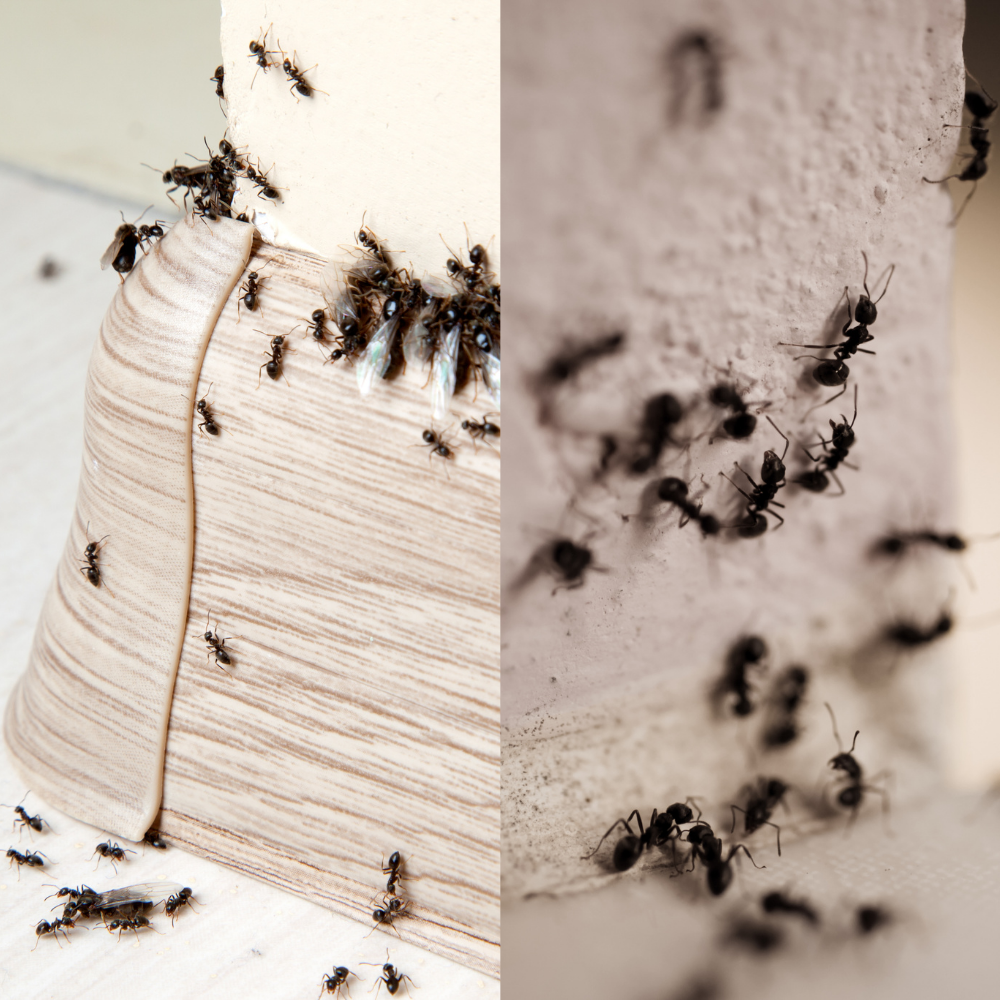
Recognizing the signs of an active ant infestation is crucial for taking effective action before the problem worsens. Here are the main indicators to watch for:
– Ant trails: Ants follow defined paths thanks to pheromones left by scouts. These trails can often be seen along walls, baseboards, cabinets, or across countertops.
– Visible nests: Ant nests can take various forms, but they are often located in isolated and protected places. Inside, they can be hidden behind appliances, in damp corners, or under floors.
– Increased activity in food areas: An increase in the number of ants around areas where food is stored, prepared, or left out, such as kitchens or pantries.
Prevention methods
Prevention is the first line of defense against ants. Here are some simple but effective measures:
– Maintaining cleanliness: Ensure that kitchen surfaces are free of crumbs and sticky substances. Regularly clean under appliances and in cabinets.
– Waste management: Keep trash bins tightly closed and regularly dispose of waste to avoid attracting ants.
– Blocking entry points: Inspect and seal cracks and openings around windows, doors, and foundations that could serve as entry points for ants. For more advice, you can also visit the Government of Canada website.
Home treatment solutions
If ants have already established a presence in your home, here are some treatment solutions:
- Home remedies: Use white vinegar or lemon juice to erase the pheromone trails of ants. Essential oils such as peppermint or eucalyptus are also repellent to ants.
- Ant baits: Baits containing active substances like borax can be effective. Ants carry the poison back to the colony, thus eliminating the source of the infestation.
Professional products and when to use them
In some cases, infestations may be too large to be managed by home remedies:
- Professional products: Stronger commercial-use insecticides may be necessary for persistent infestations. These products should be used in accordance with instructions to avoid any risk to health and the environment.
- Professional consultation: If home methods fail, it is wise to seek professional pest management services.
Conclusion
Managing ants in the home requires a combination of prevention, early intervention, and, in some cases, the help of professionals. By adopting a proactive approach and using the right strategies, you can keep your home free from these invasive pests. For more advice or professional intervention, do not hesitate to contact us or visit our services.